Preserving the Legacy of SSN-698 & CA-130
Join us in developing a monument to the submarine, cruiser, their namesake city and the shipyard that cared for them
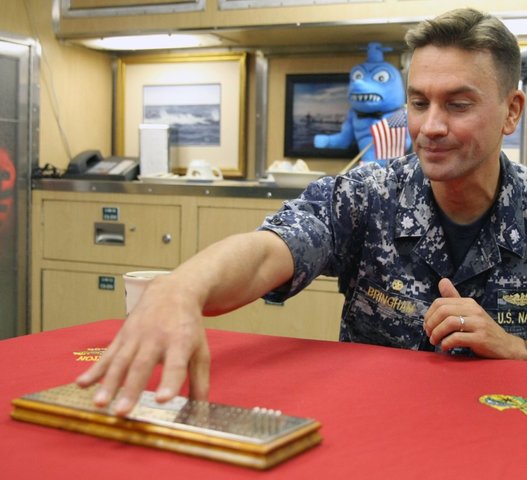
USS Bremerton’s commanding officer, Wes Bringham, and the historic cribbage board game in the ward room.
The connection between the U.S. Navy and the game of cribbage is a long-standing tradition. Cribbage, a card game with a unique scoring system, became popular among sailors during long sea voyages. The Navy used cribbage to pass time, build teamwork, and keep minds active during downtime. Cribbage boards are commonly found on ships and submarines.
We share the story of the Navy’s famous Lucky Cribbage Board in our exhibit We Have the Watch, which is now open! You can learn more about the cribbage board here: https://youtu.be/RSyfI7fMp6o. It was carried onboard USS Bremerton until she was decommissioned.
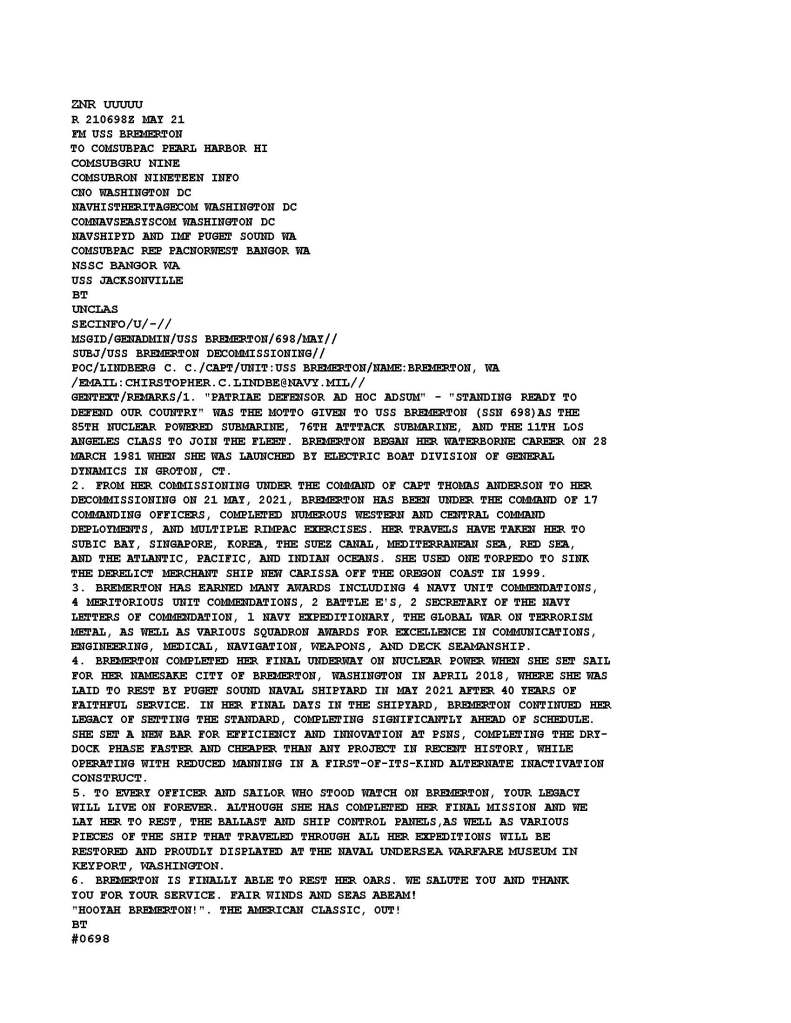
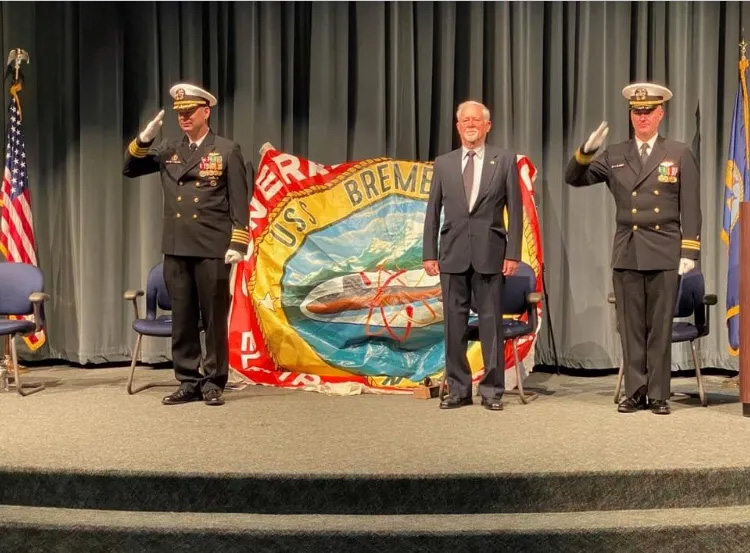
Today at 1245 I officially signed over USS BREMERTON (SSN 698) to PSNS. The Bad Fish a.k.a. the American Classic is officially decommissioned. It has been an extraordinary 40 year run for the best Submarine in the US Navy. I thank each of you for your service and dedication you provided during your tenure as BREMERTON.
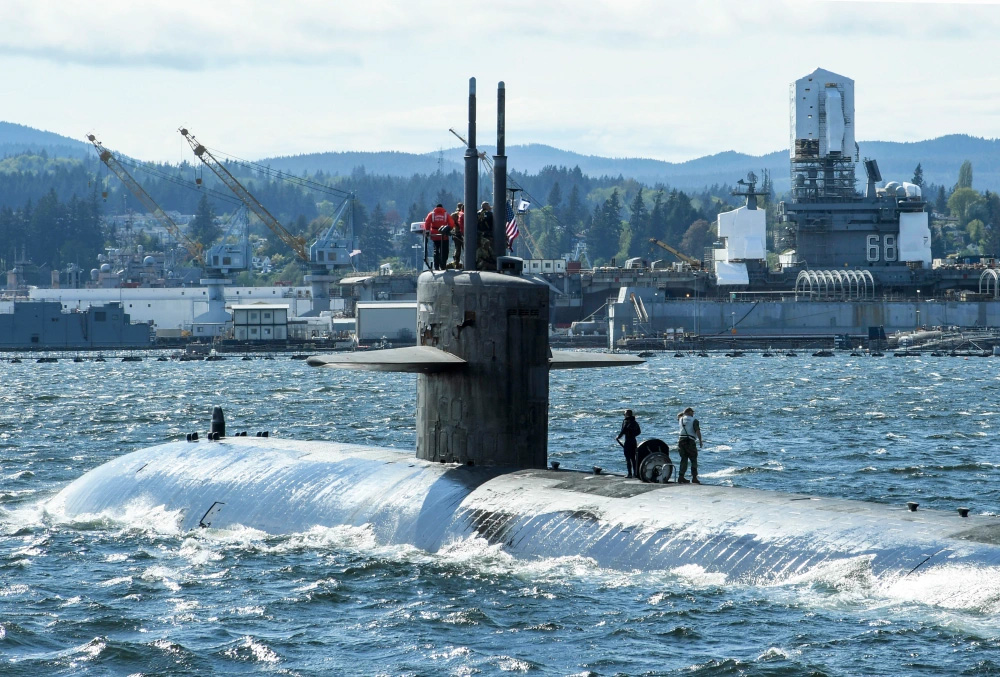
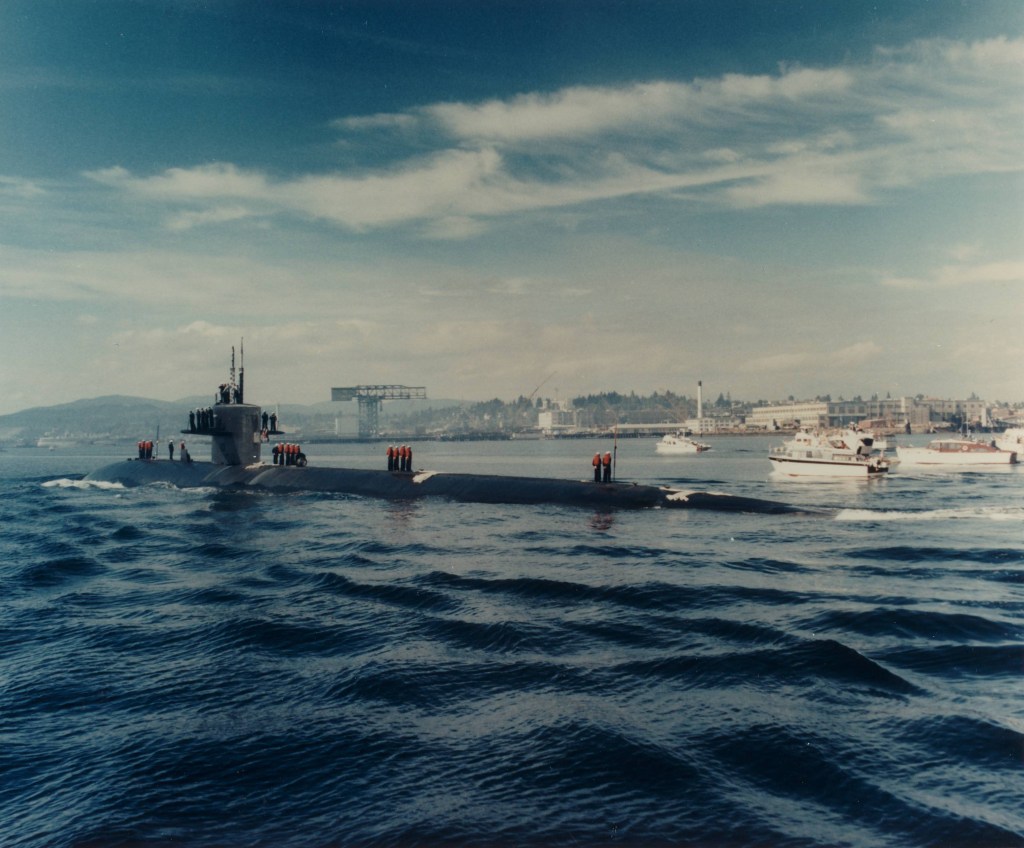
BREMERTON Departing.
CAPT Chris Lindberg
17 th and Final Commanding Officer of USS Bremerton (SSN 698)
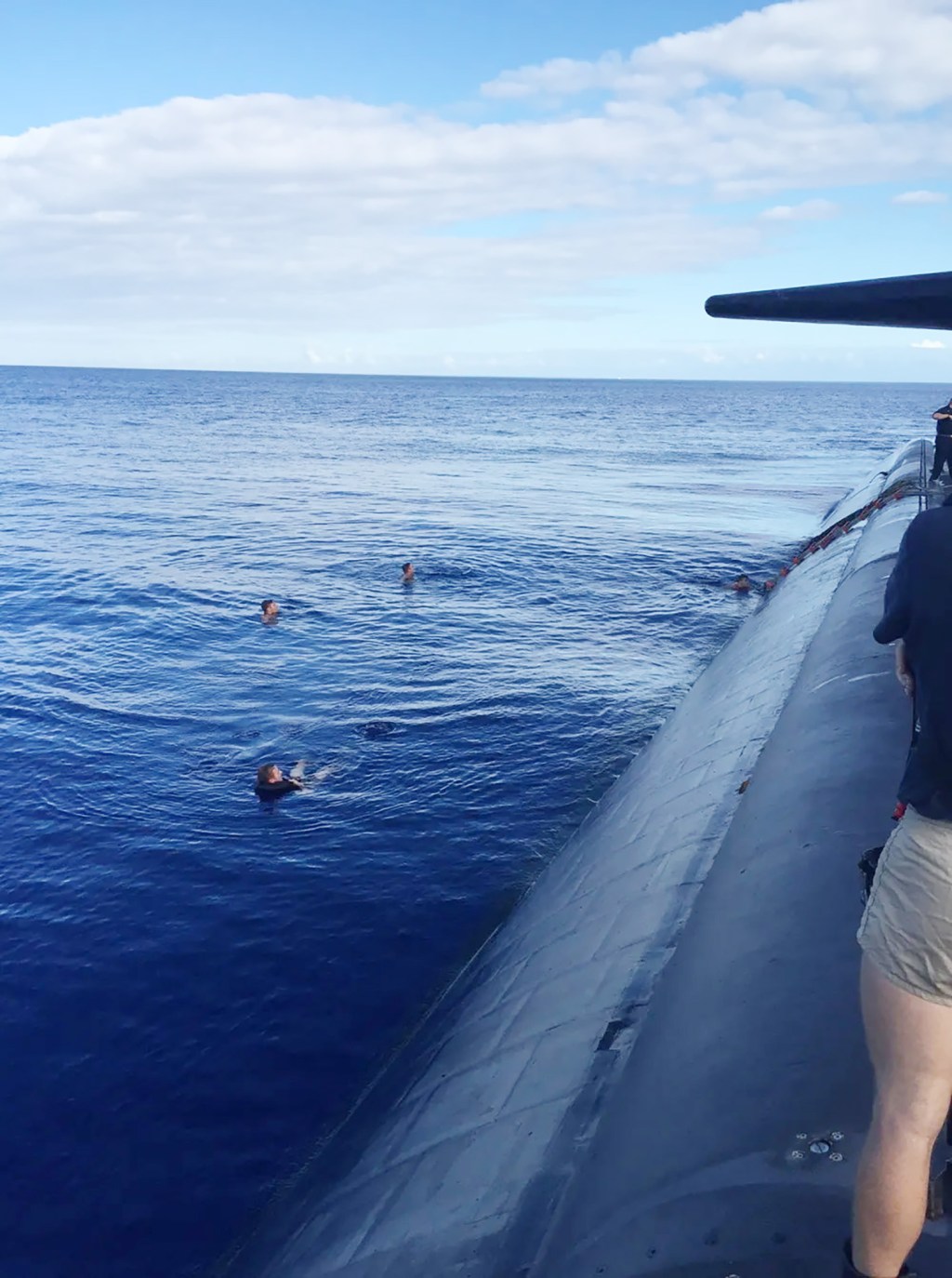
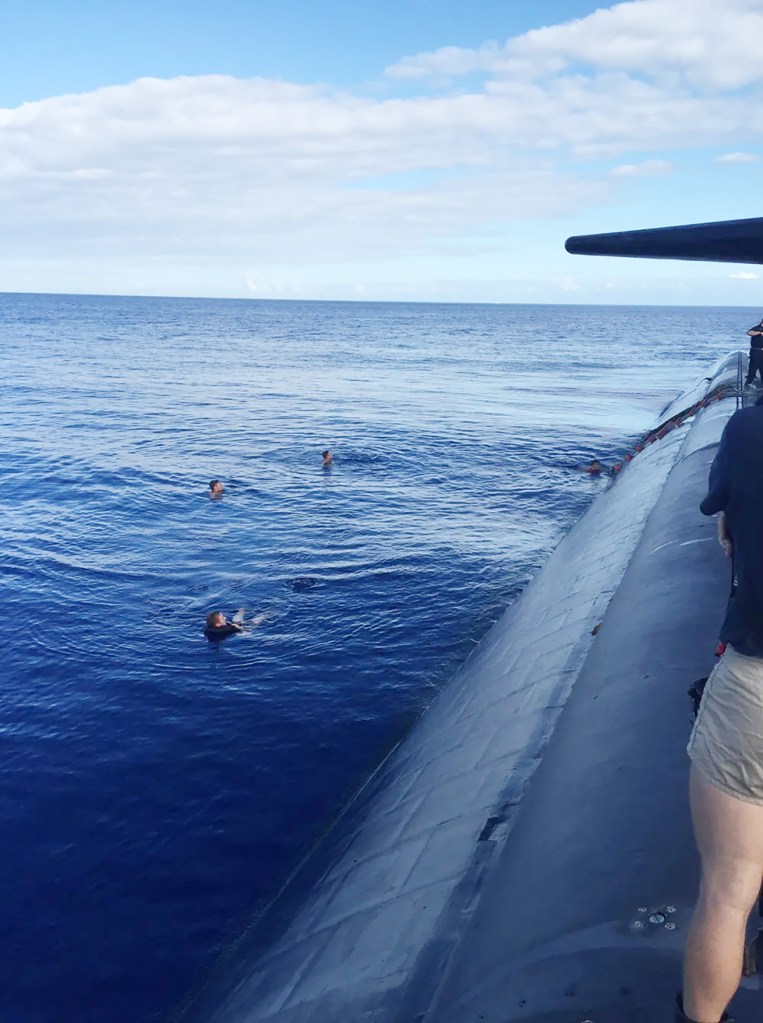
On Monday morning, BREMERTON got underway with her new CO for a scheduled two week underway to support a multinational submarine exercise. In addition to submarine tracking, the BREMERTON kept busy conducting maintenance, training, running drills and planning for an upcoming Docking Continuous Maintenance Availability (DCMAV). As a reward for all of the hard work, the Badfish squeezed in a swim call (reenlistment training) in the warm waters of the Pacific on the south shores of Oahu, prior to returning to port. – Swim calls are not as frequent as they used to be; compressed operational timelines, fleet requirements, and risk aversion have taken their toll.
CO’s context: For some, swim calls are only folklore; many can go their entire career without ever conducting one. In my 18 years of submarine service (nearly ten years of sea time), I had never even observed a swim call. That was until BREMERTON. Even before taking command, crew members were very interested in my plans and thoughts to conduct a swim call during our last underway prior to entering DCMAV (apparently my predecessor had promised such post deployment that never came to fruition due to material challenges and schedule perturbations). Being my first underway while in command, I was not keen to acquiesce. But because my crew was diligent and unrelenting, I said I would think about it and used the opportunity to do some operational planning training; challenging my team to develop an air tight plan to include, watch bills, training, and ORA (operational risk assessment) and the wardroom happily stepped to. Even with such a plan available to me, weather, seas, and traffic conditions had to be almost perfect to pull off a swim call. In my mind, I did not believe we could pull it off and gave it only a 5% chance of occurrence and went to bed that night with that solace.
At 0530 the next morning, I went to the bridge to assess wind and seas as we headed inbound. As we crossed into the lea of Oahu, wind and seas abated – just as my Assistant Navigator had anticipated and to my surprise, conditions were favorable for a swim call. The Officer of the Deck called down to control for the rifleman to report to the bridge to be stationed as a shark watch (Submariners don’t get a lot of practice shooting on the range, so opinions are divided over whether the expended ammunitions would end up in the shark or in the shark bait. But for those not afraid of sharks or the shark watch, were free to come topside for a swim.)
For most onboard, a swim call is the pinnacle of things to do onboard a submarine while at sea. Jumping from the fairwater planes is now a very unique opportunity for a US submariner (SSBN fairwater planes are too high and most SSNs no longer have them).
For the CO, a swim call is possibly the most terrifying evolution possible. Aside from all of the risks associated with sending personnel topside in the open ocean, there are 50 young excited sailors full of adrenaline looking to blow off some steam. Even with the COB topside attempting to coral the rambunctious sailors, I have never been more on edge then during my first swim call. I must have come across to my sailors as a grumpy old man.
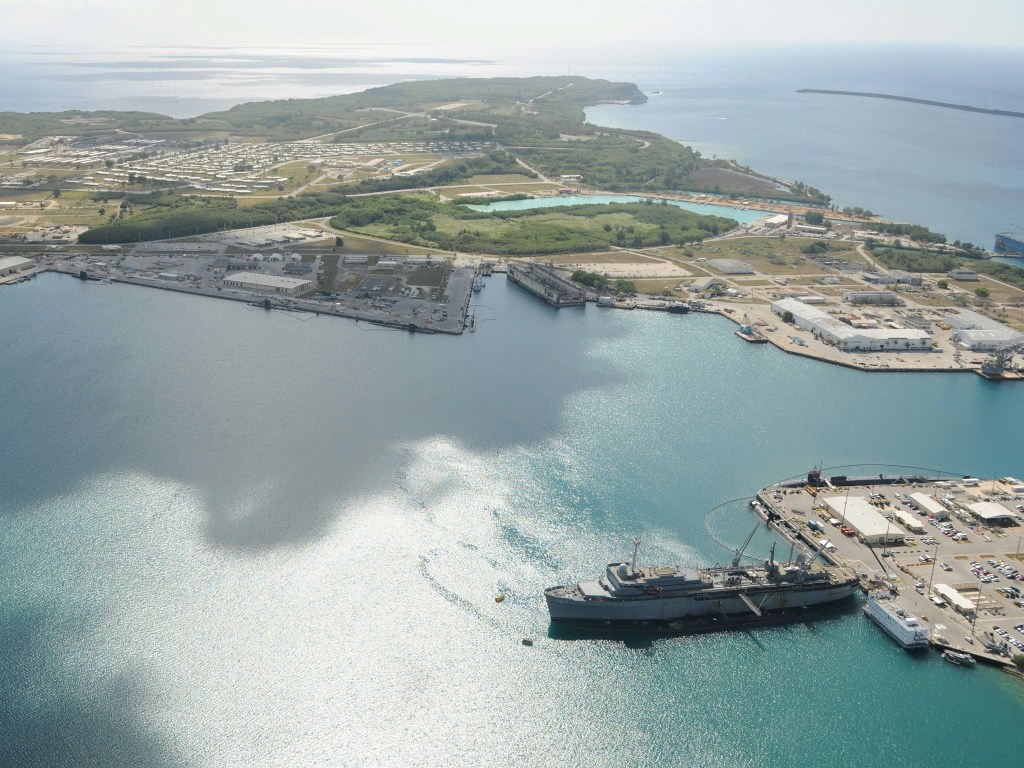
With the mooring of the Los Angeles class submarine Bremerton (SSN-698) on April 16, Apra Harbor now has seven submarines in port. This is the highest number of submarines in the harbor since the re-establishment of Commander, Submarine Squadron (SUBRON) 15 in 2001. The submarines are conducting maintenance prior to continuing their deployments. The submarines include (from top left, clockwise), the Japan Maritime Self-Defense Force submarine JS Hakuryu (SS-503), the Los Angeles class submarines Cheyenne (SSN-773), Bremerton, and Charlotte (SSN-766), Ohio (SSGN-726), the Los Angeles class submarines Oklahoma City (SSN-723), and Key West (SSN-722), and the submarine tender Frank Cable (AS-40) on 17 April 2013
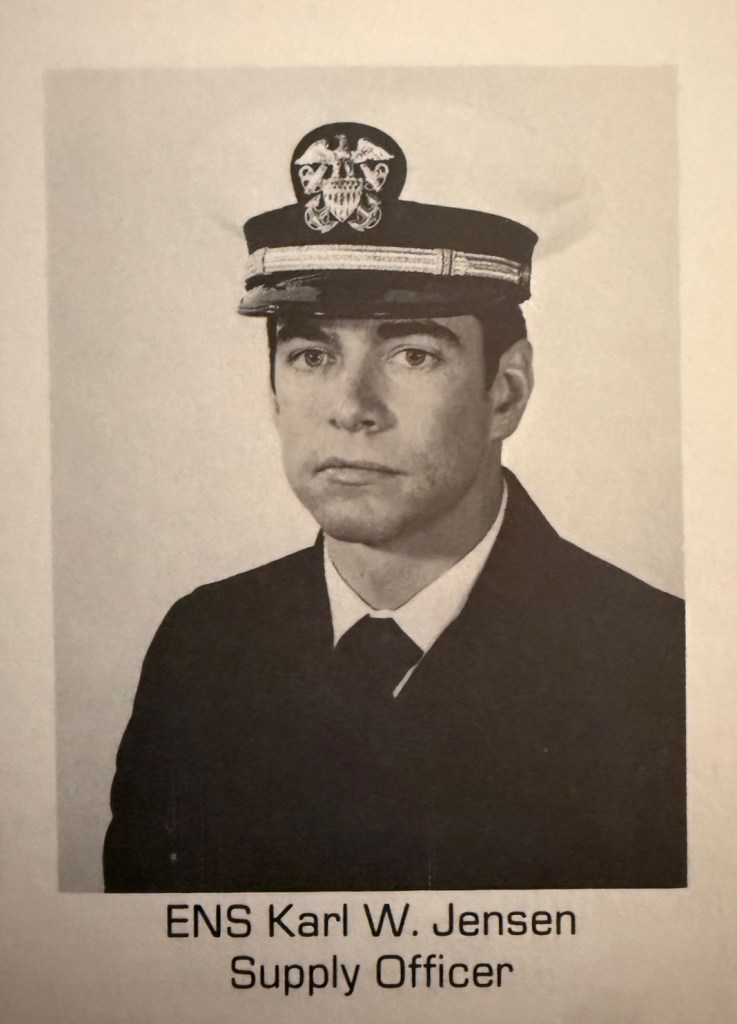
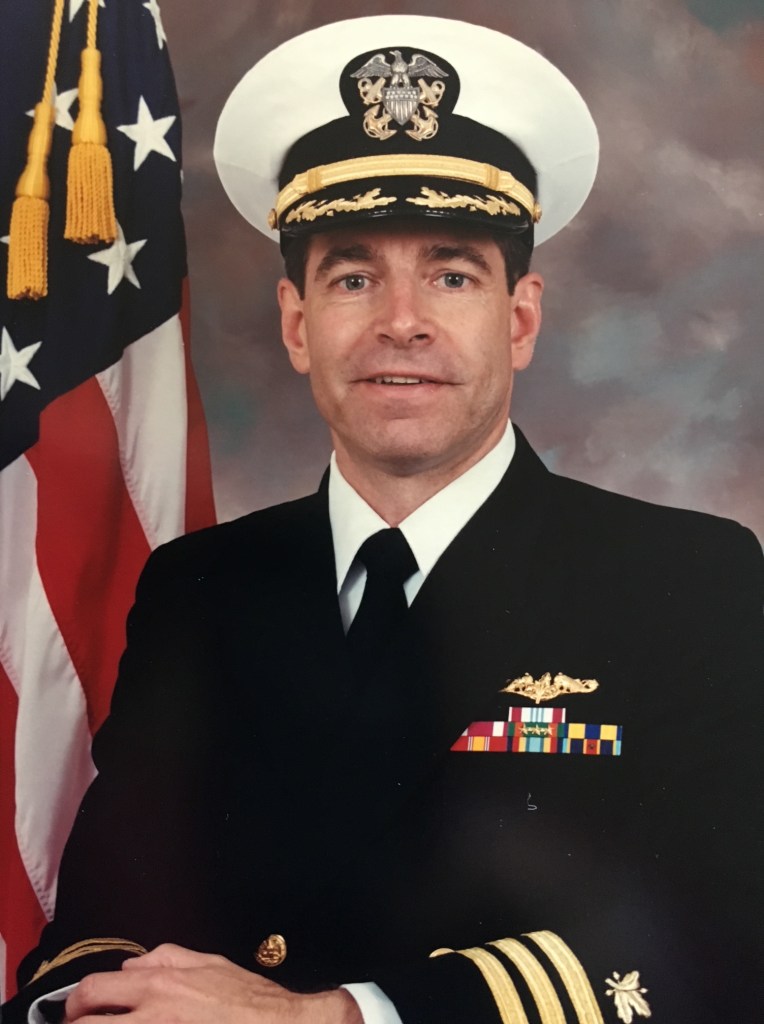
We are pleased to announce that Karl Jensen, Commander, US Navy Supply Corps (Retired), has joined the BREMERTON Monument team. Karl served as the commissioning supply officer for submarine USS BREMERTON (SSN-698), beginning his distinguished naval service in 1980. Karl’s experience and dedication bring valuable insight and historical perspective to our efforts.
Upon completion of Officer Candidate School, Supply Corps School and the Submarine Officer Basic Course in June 1980, Karl reported to the BREMERTON SSN-698 pre-commissioning unit at Electric Boat Shipyard in Groton, CT, and served onboard through 1982. Major events during Karl’s tour onboard included offload and reload of all provisions and repair parts to repair defective welds in the forward compartment of the ship, hosting Admiral Rickover for Alpha sea trials, the ship’s first deployment to the North Arabian Sea with a port visit to Perth, Western Australia, and transit to her new home port in Pearl Harbor, Hawaii. BREMERTON also made its first port visit to Bremerton, Washington, and participated in San Francisco Fleet Week 1982 during Karl’s service onboard.
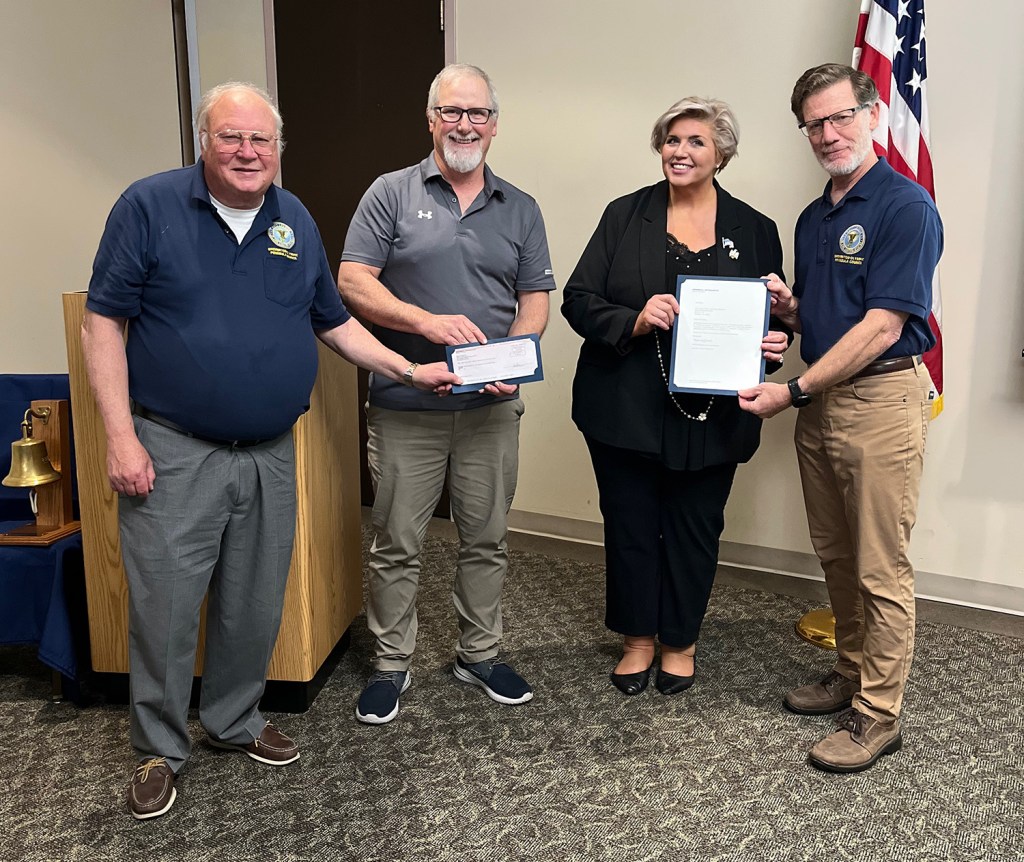
GDMS Donation presentation: Capt Alan Beam , CDMC Cris Addington, Garnett Kelly and Capt Jerry Logan
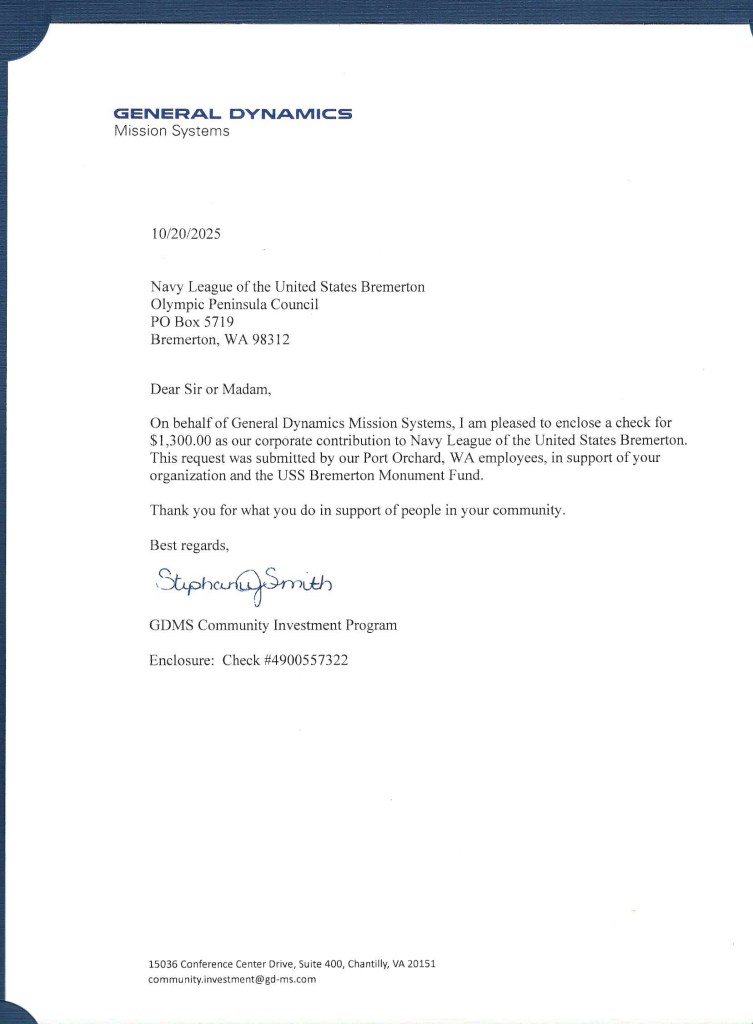
At the November 12 2025 Bremerton Olympic Peninsula Luncheon General Dynamics Missions Systems Port Orchard Garnett Kelly and Cris Addington donated $1300 to the USS Bremerton Monument. Receiving the donation was captain Alan Beam Commanding officer #3 and Captain Jerry Logan Commanding Officer #10 Chairman of the USS Bremerton Monument.
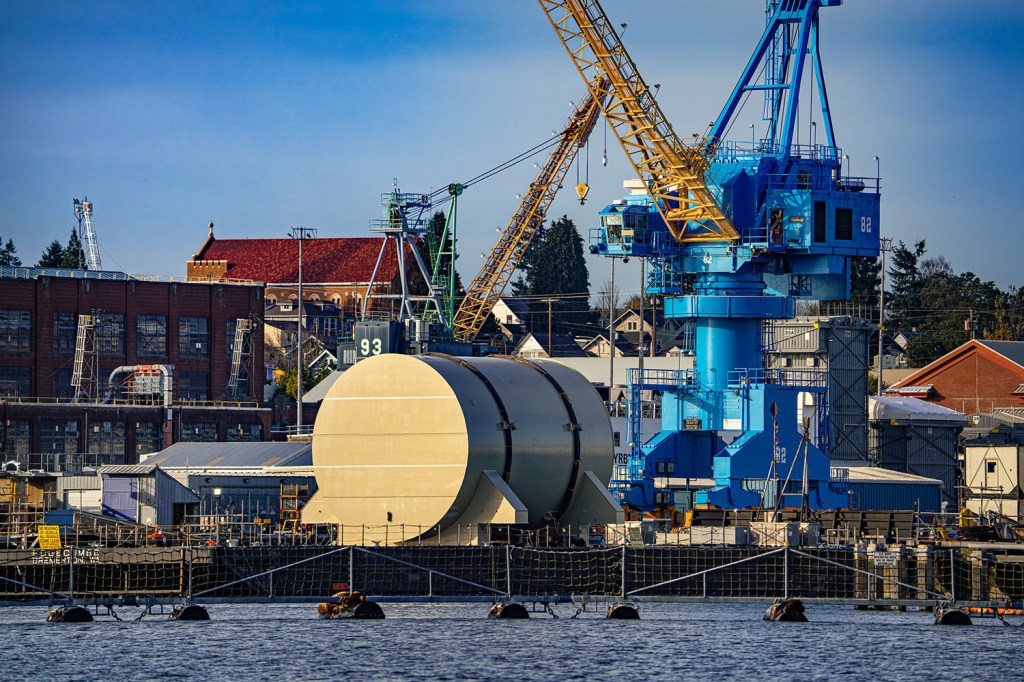
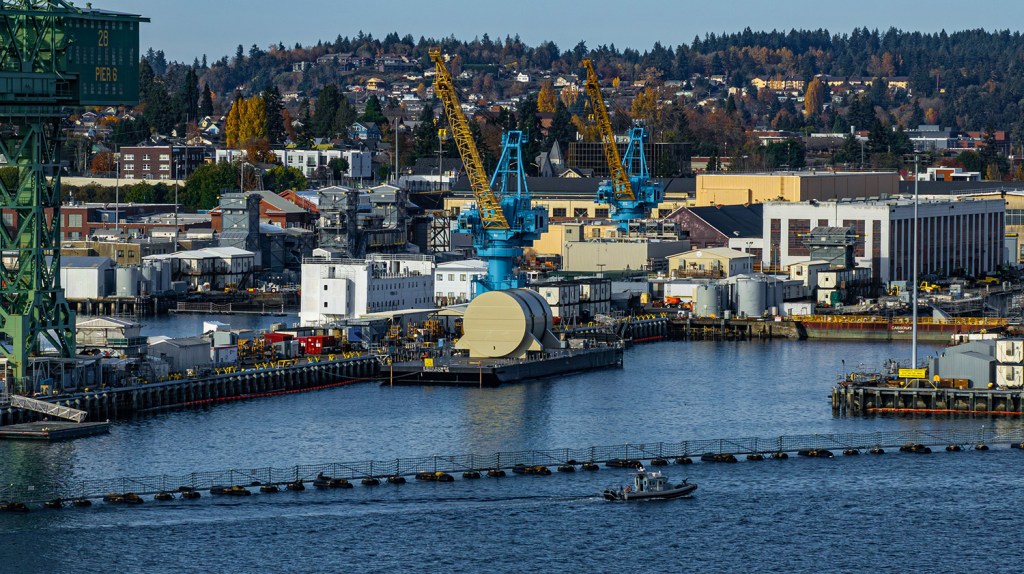
Submarine Reactor Compartment being prepared for shipment at Puget Sound Naval Shipyard.
Second and final nuclear reactor of the year packaged up and ready to be moved to Hanford!
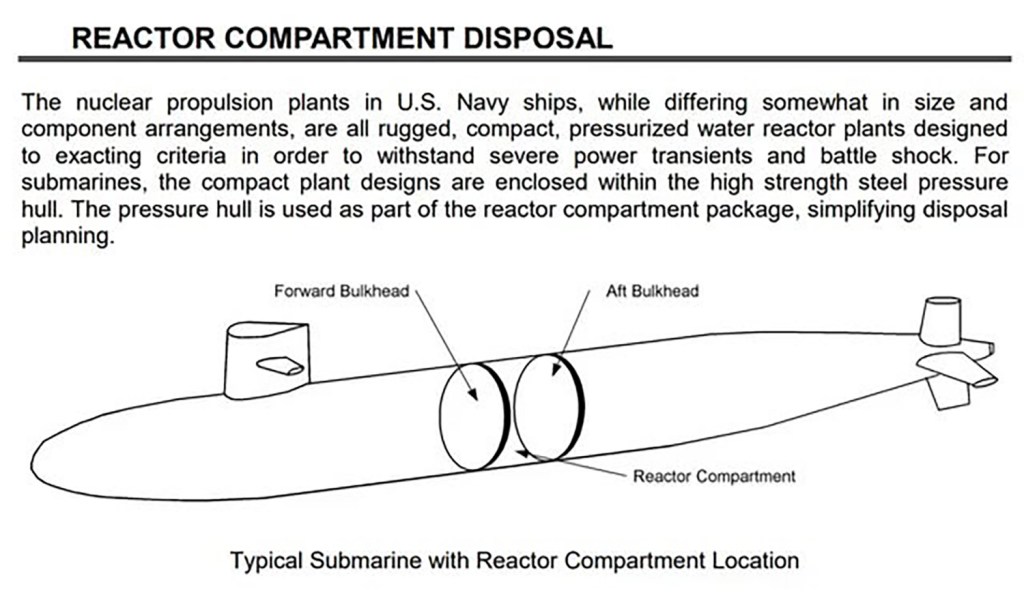
Two submarines pass through the United States Navy Ship-Submarine Recycling Program each year. The Reactor Compartment Disposal process consists of defueling and removing the nuclear core, which is moved separately by rail to the Expended Core Facility at the Idaho National Laboratory. But because the reactor compartment (RC) itself is made mostly of lead shielding that underwent decades of neutron bombardment, the RC is treated as low-level hazardous waste and as such it cannot be recycled.
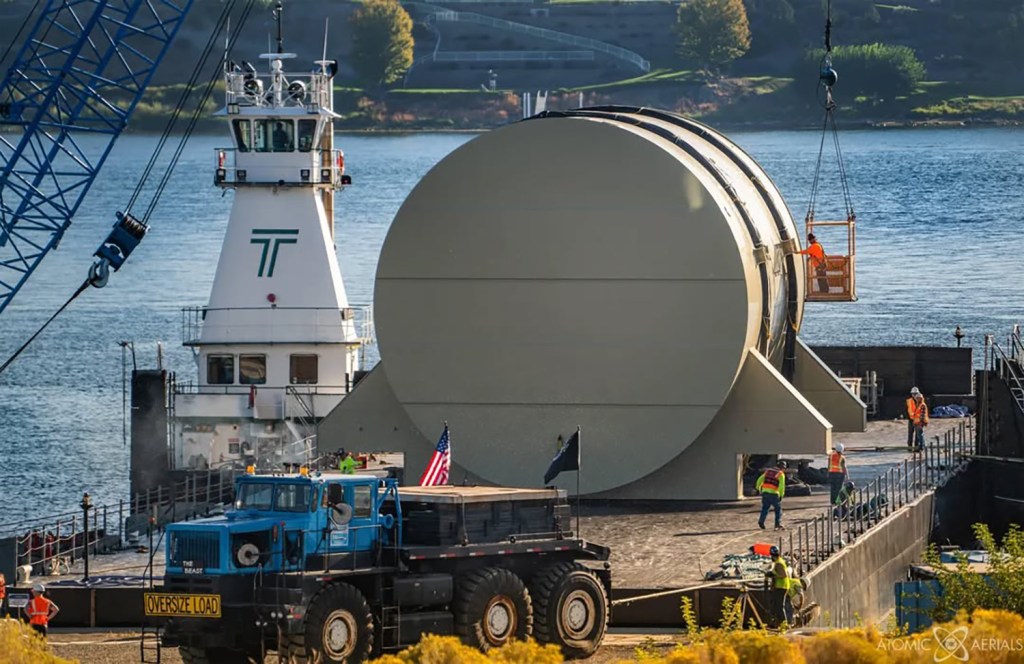
Barge board RC Compartment Awaiting transport pier side at Puget Sound Naval Shipyard
Instead, the entire RC is sliced out of the submarine, and the ends are capped. This uses the sub pressure hill itself to create a sealed container.
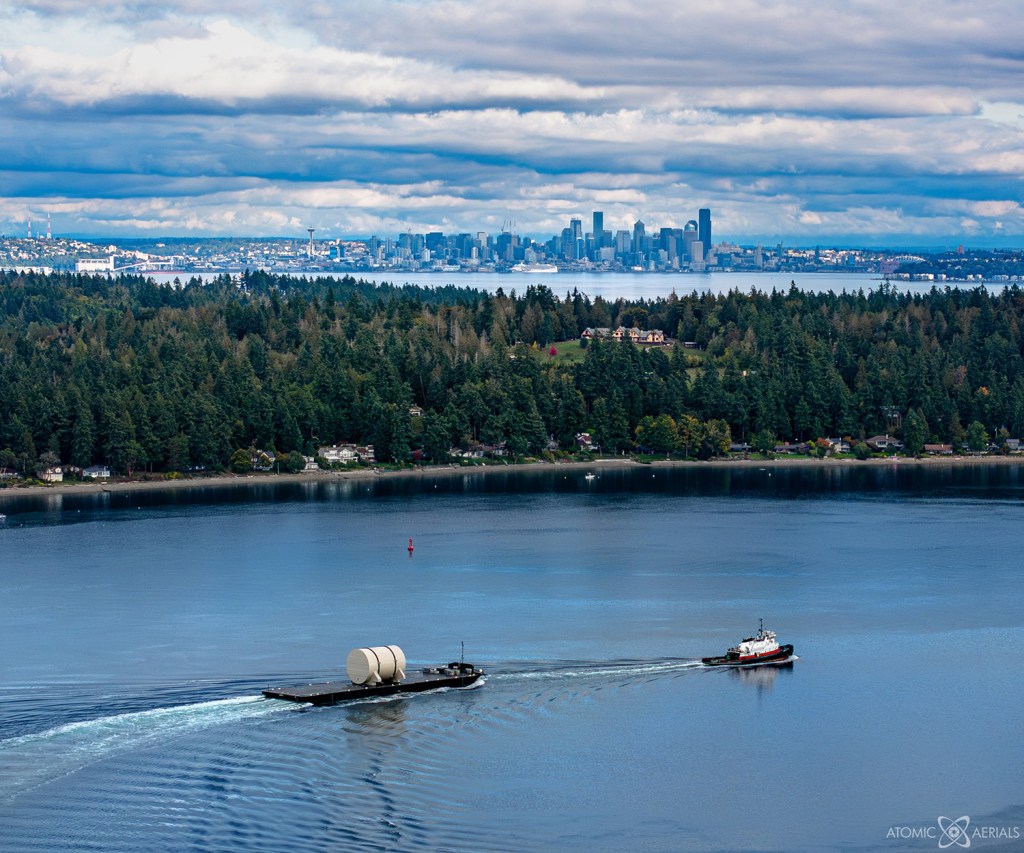
RC compartment barge departing PSNS in Rich Passage
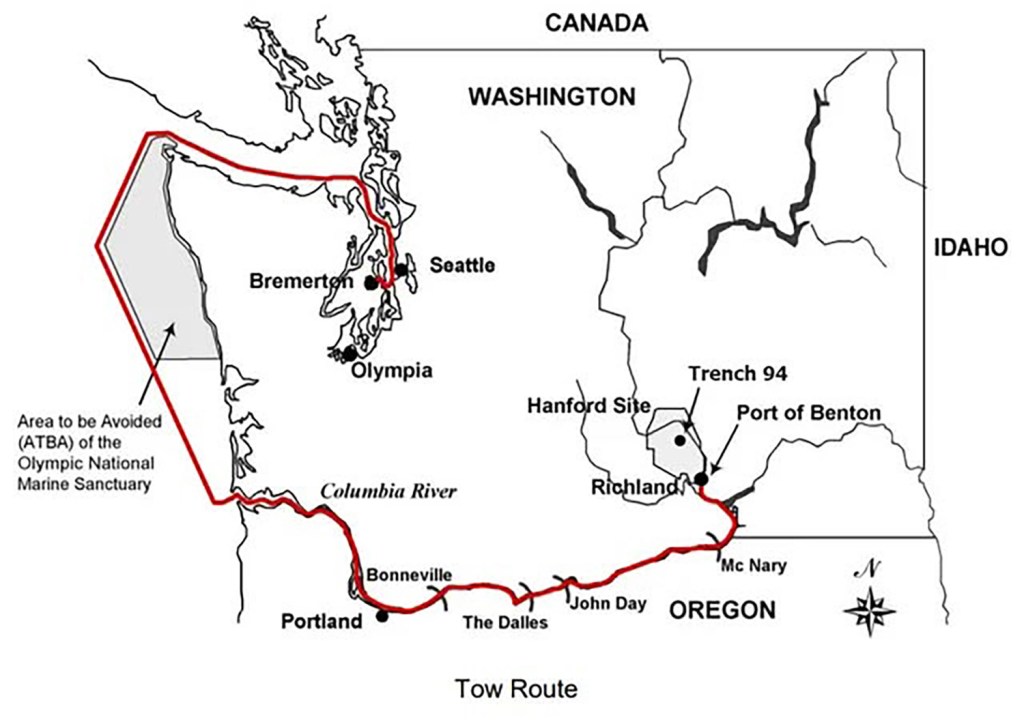
The “package” is then put on a barge and moved about 700 miles from the naval yard near Seattle out to the Pacific, down to Oregon, then up the Columbia River to the Hanford Nuclear Site.
The sealed “package” is 34′ tall by 45′ long and weighs 1,680 tons. Lead shielding and minor radioactivity from decades of neutron bombardment classify the contents as low-level hazardous waste. Cobalt 60, which has a half-life of 6 years, is the dominant radioactive nuclide.
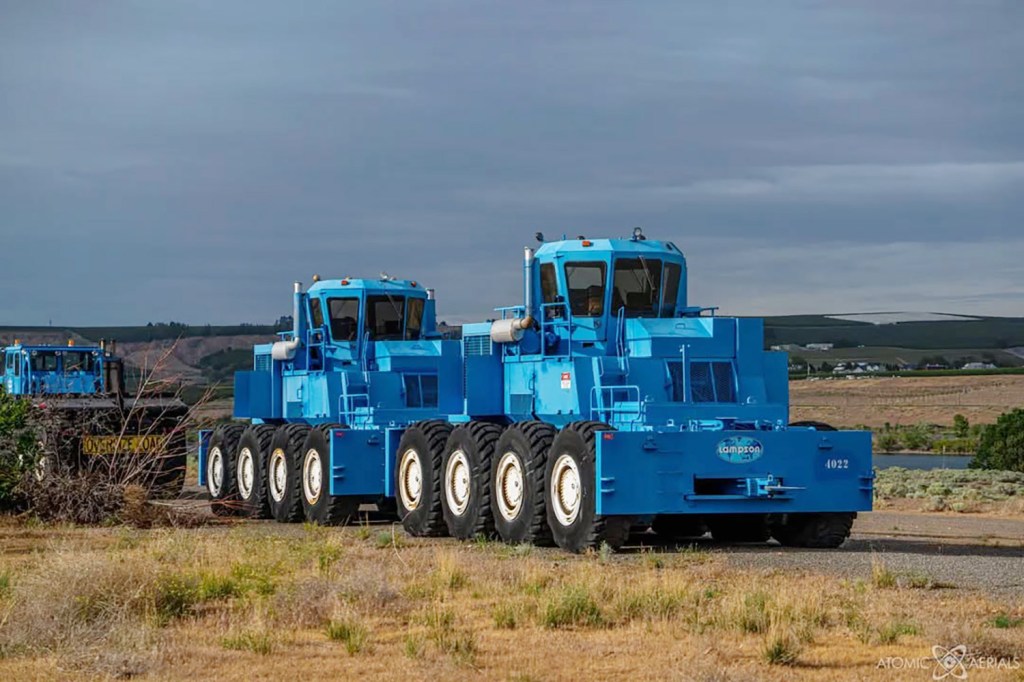
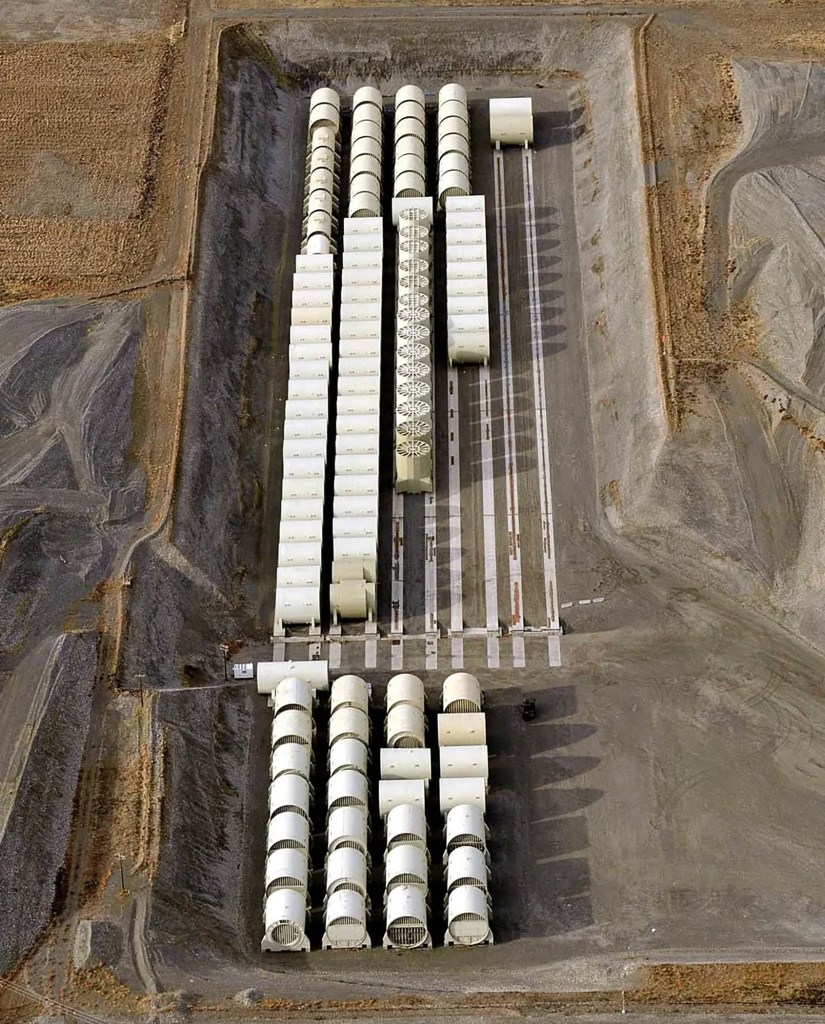
The package is then loaded onto a self-propelled modular transporter and dragged another 25 miles with giant “land tugs” into the Hanford Site, where it is placed in a huge pit known as Trench 94 with about 130+ other former reactor compartments. The pit is left open so satellites can see into it for treaty purposes, but the pit will eventually be filled with clay and cement.
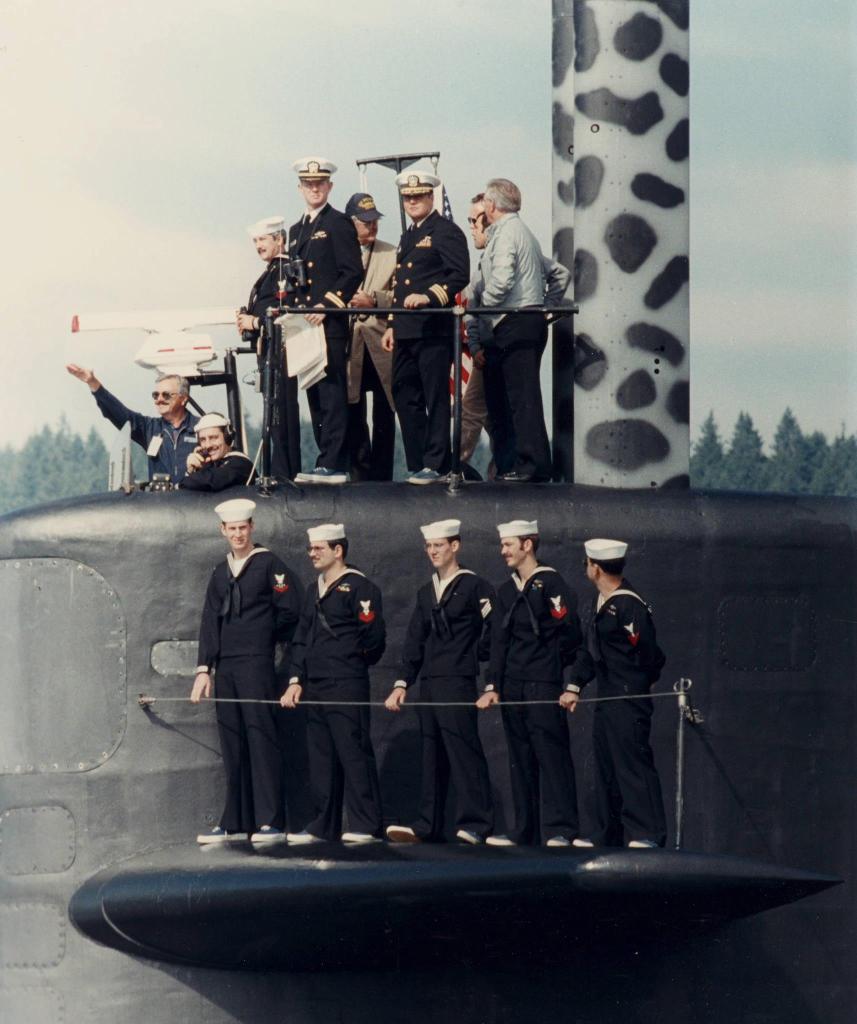
Sea Story – In October 1986 I had the opportunity to bring USS Bremerton to Bremerton. Homeported in Pearl Harbor, I wrote the Bremerton Yacht Club and volunteered to be their Flagship. We rendezvoused with the Navy tug off Point no Point to Load VIPs for the trip into Puget Sound Navy Shipyard (PSNS). It was a typical October Day in Puget Sound, the fog was so thick I couldn’t see my Starboard sailplane. When we rounded Glover Point on entrance into Sinclair Inlet the sky’s opened up and it was a bright, beautiful sunny day. We were met with a flotilla of about 90 Yacht Club boats. It is the only time I’ve seen a Washington State Ferry stop. They came out of the fog behind us and fell into the procession. With 2 tugboats spraying water in front we proceeded into port. The crew was not happy with me, I mandated everyone go on liberty in Service Dress Blues. Their attitude quickly changed when they discovered they couldn’t by a meal or a drink anywhere in the county! It was truly a special time! – Alan Beam CO #3
The person standing behind me in the gray jacket is Mayor Glenn Jarstad. To his right is my brother Glen.
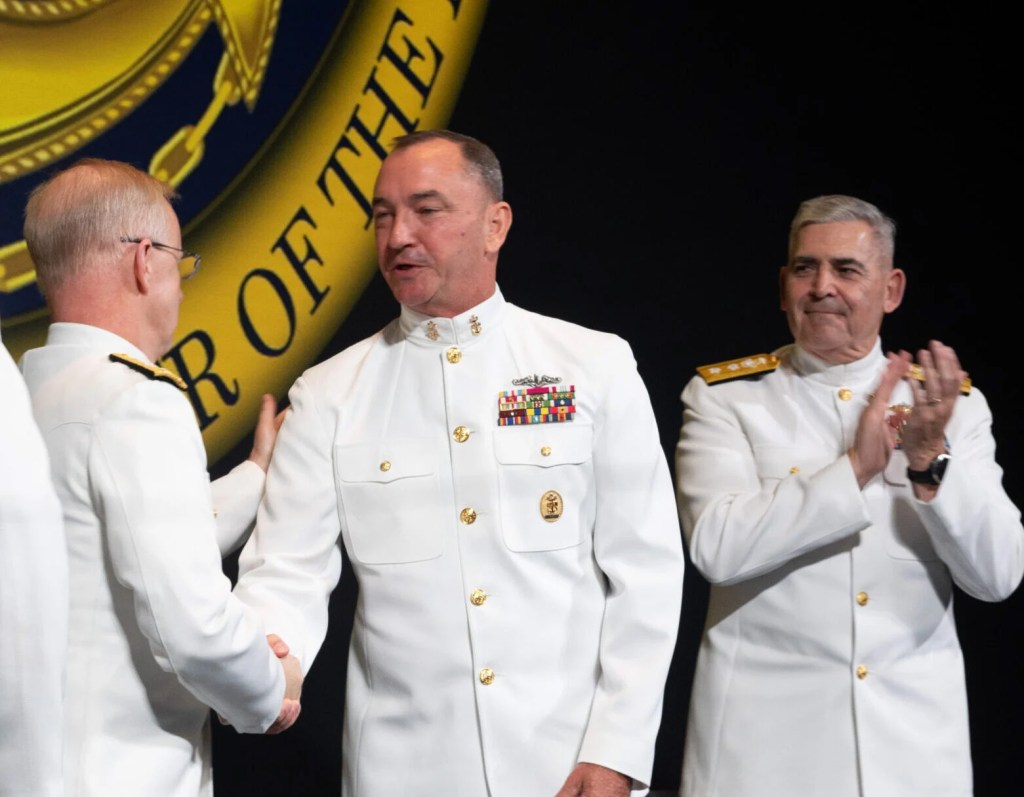
Chief of Naval Operations Admiral Daryl Caudle congratulates the 17th Master Chief Petty Officer of the Navy (MCPON) John Perryman during the MCPON change of office ceremony at the United States Navy Memorial in Washington, D.C., Sept. 8, 2025. US Navy photo
Master Chief Petty Officer of the Navy John Perryman took the helm as the Navy’s top enlisted sailor Monday during a change of command ceremony held in Washington, D.C. Perryman assumed the role less than one month after the Navy announced his selectionto be the 17th master chief petty officer of the Navy. As the top enlisted sailor, Perryman is responsible for advising Chief of Naval Operations Adm. Daryl Caudle and advocating for the needs of the sea service’s enlisted force.
“Our Navy must be manned by world-class sailors led by the best warfighters at every level,” Perryman said. “You have my word — I will always fight for you and for the families who stand beside you.”
Perryman outlined his priorities in a video on Monday following the ceremony, demonstrating he is in lockstep with Caudle.
There is no one better suited to take over the helm as our Navy’s senior enlisted advisor than you,” Caudle said to Perryman during the ceremony. “Your priorities of sailors and families first, technical mastery at every level, and continuous development and talent management and my priorities of Foundry, Fleet, and Fight are mutually reinforcing, collectively exhaustive, and relentlessly enduring.”
Perryman follows MCPON James Honea, who has served in the role since Sept. 8, 2022. Honea will retire Friday after 38 years in the Navy.
Perryman enlisted in the service in 1994 and began his career as an electronics technician submariner with tours on USS Bremerton (SSN-698), USS Dolphin (AGSS-555) and USS Cheyenne(SSN-773). He also served as the command master chief on USS Hawaii (SSN-776), according to the Navy.
He previously served as the senior enlisted sailor of Submarine Force U.S. Pacific Fleet, Submarine Group Seven, in Submarine Force Atlantic and U.S. Strategic Command. Additionally, Perryman served as the senior enlisted advisor to Caudle while the pair led U.S. Fleet Forces Command.