USS Bremerton Crest

USS Bremerton Monument

Preserving the Legacy of SSN-698 & CA-130
Join us in developing a monument to the submarine, cruiser, their namesake city and the shipyard that cared for them

Category: Puget Sound Naval Shipyard

  • Submarine Recycling

    Submarine Recycling

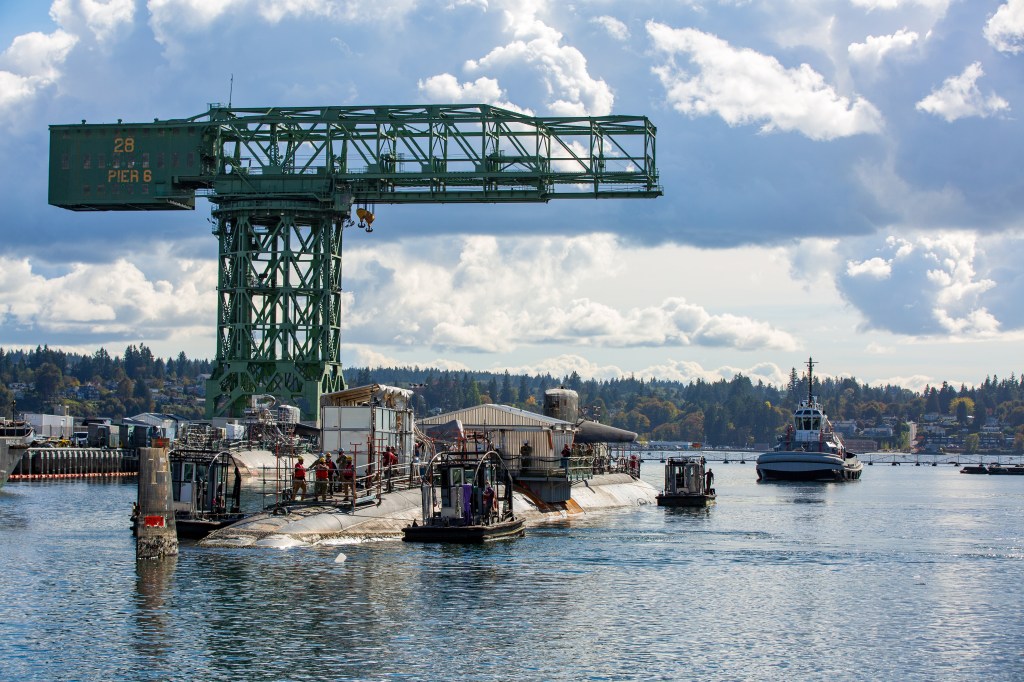
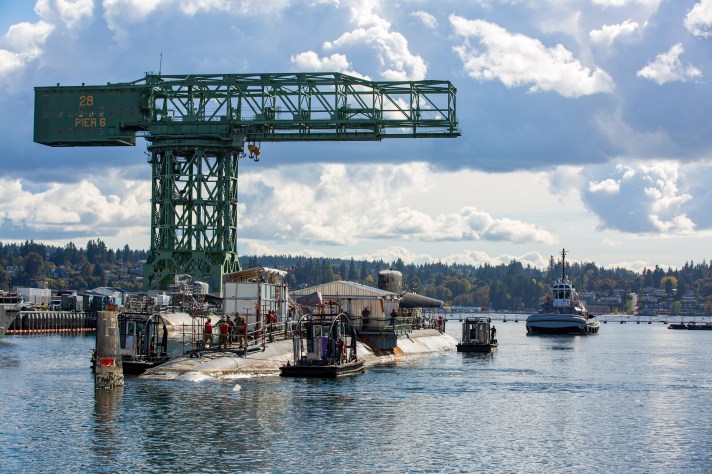
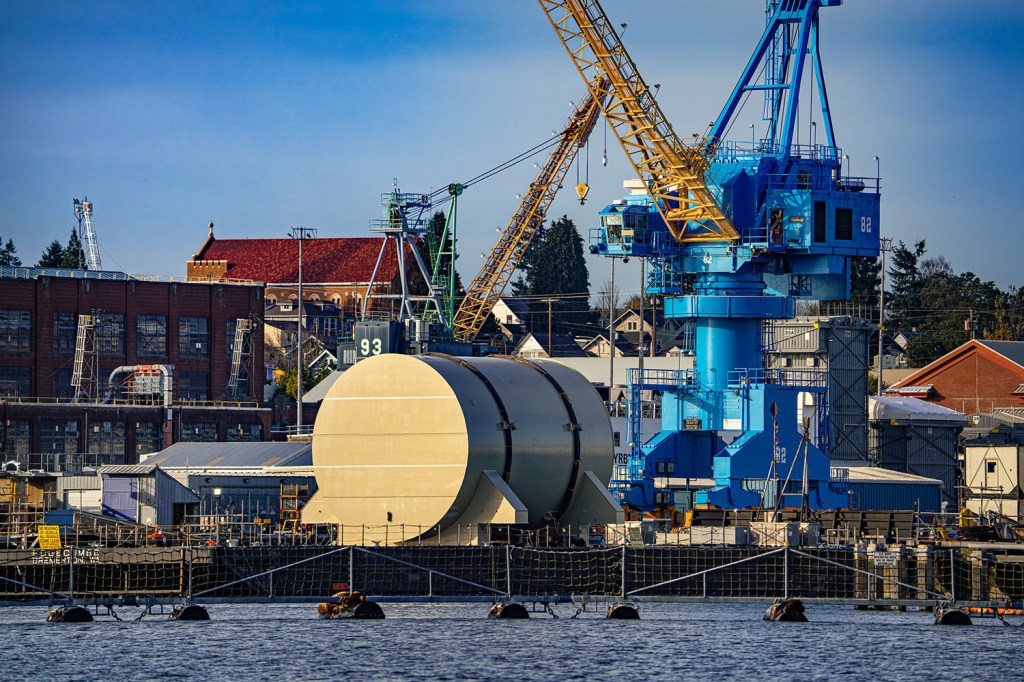
    Submarine Reactor Compartment being prepared for shipment at Puget Sound Naval Shipyard.

    Second and final nuclear reactor of the year packaged up and ready to be moved to Hanford!

    Two submarines pass through the United States Navy Ship-Submarine Recycling Program each year. The Reactor Compartment Disposal process consists of defueling and removing the nuclear core, which is moved separately by rail to the Expended Core Facility at the Idaho National Laboratory. But because the reactor compartment (RC) itself is made mostly of lead shielding that underwent decades of neutron bombardment, the RC is treated as low-level hazardous waste and as such it cannot be recycled.
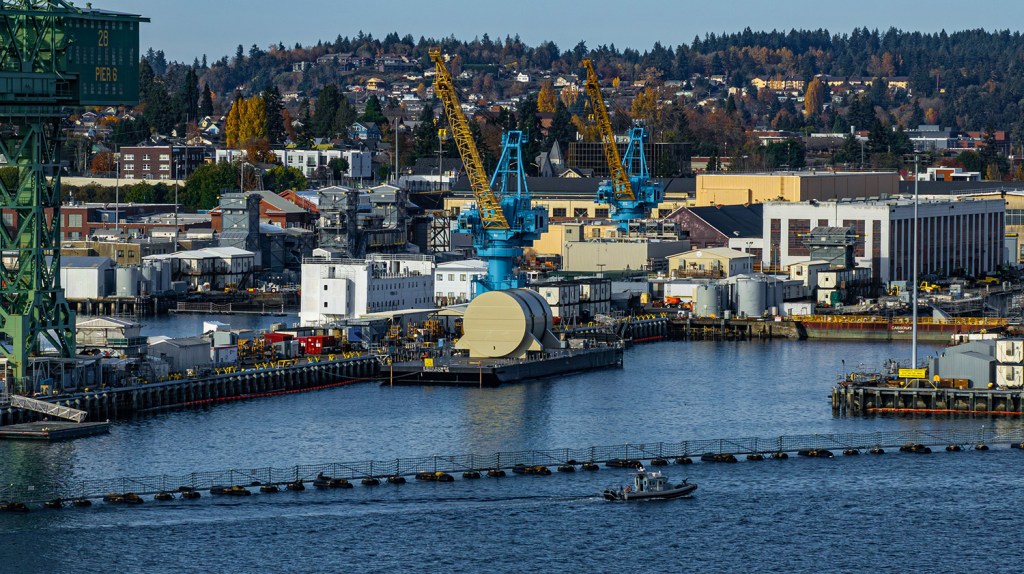
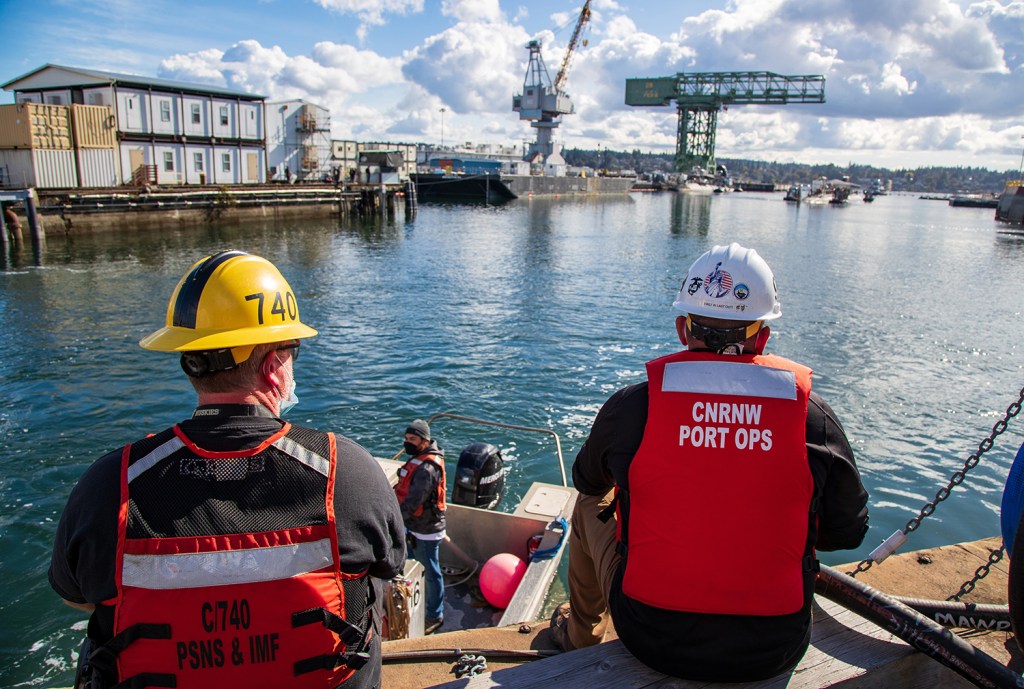
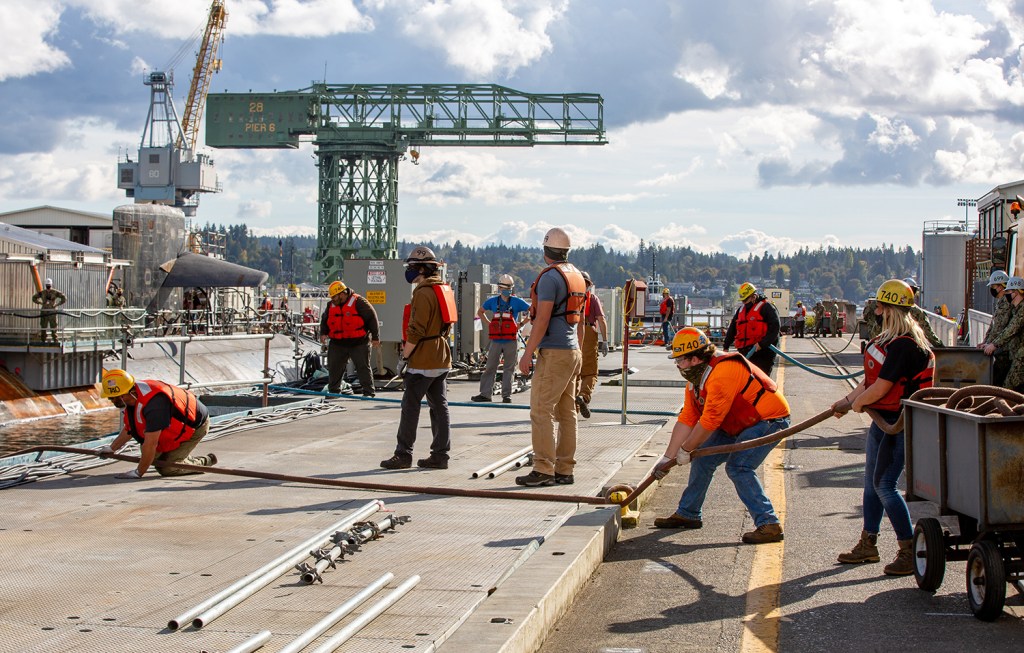
    Barge board RC Compartment Awaiting transport pier side at Puget Sound Naval Shipyard

    Instead, the entire RC is sliced out of the submarine, and the ends are capped. This uses the sub pressure hill itself to create a sealed container.
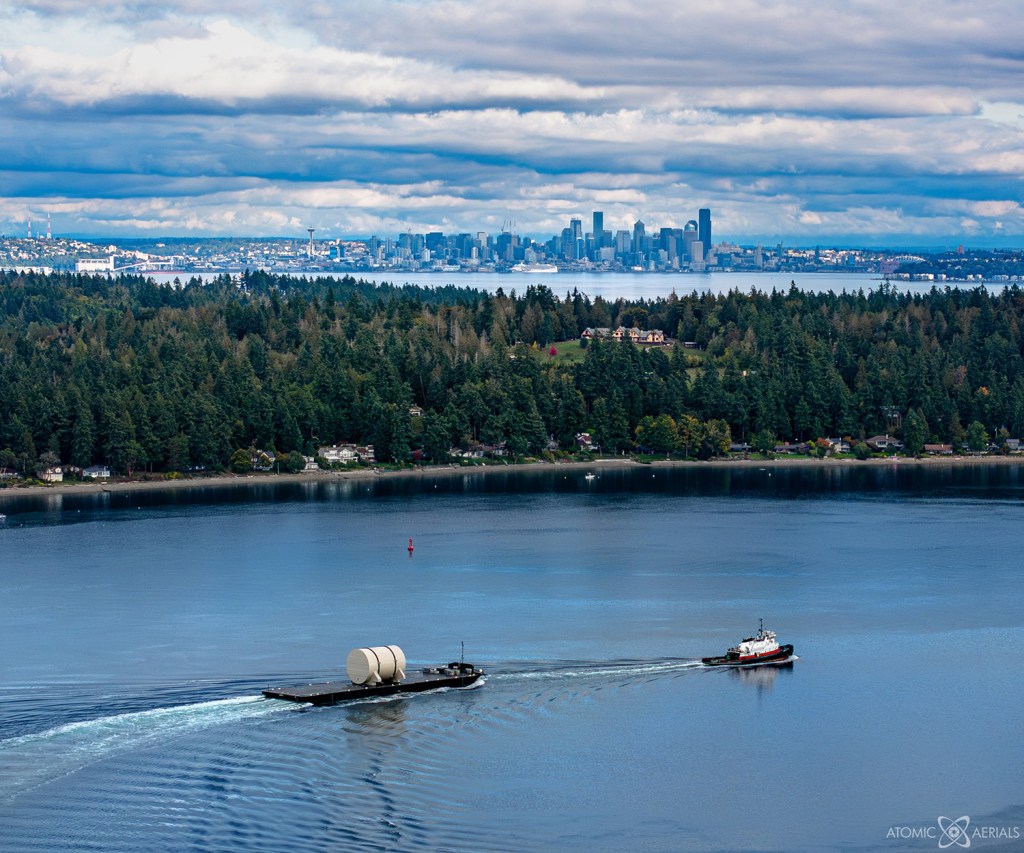
    RC compartment barge departing PSNS in Rich Passage

    The “package” is then put on a barge and moved about 700 miles from the naval yard near Seattle out to the Pacific, down to Oregon, then up the Columbia River to the Hanford Nuclear Site.
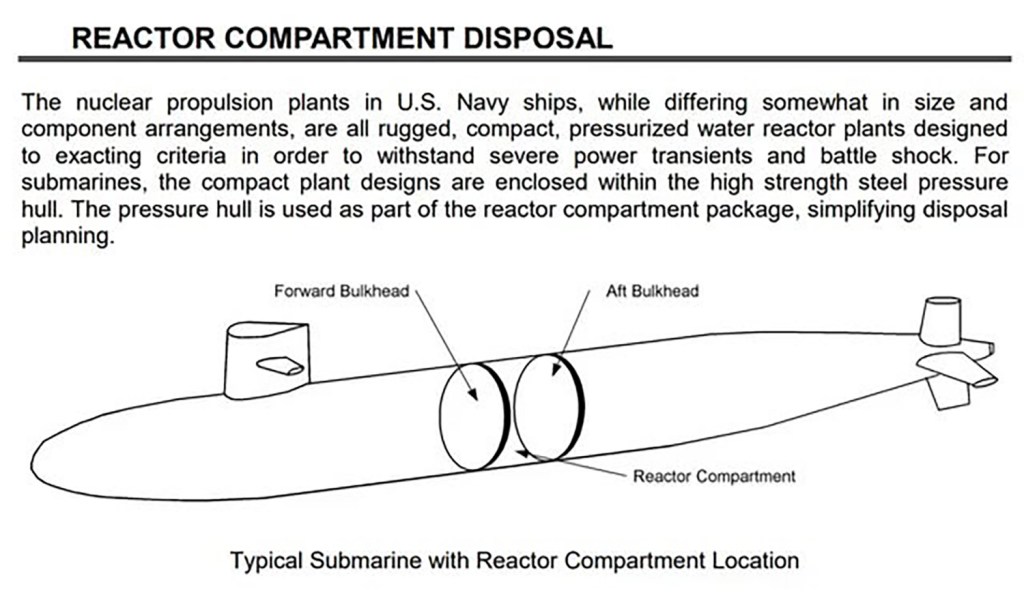
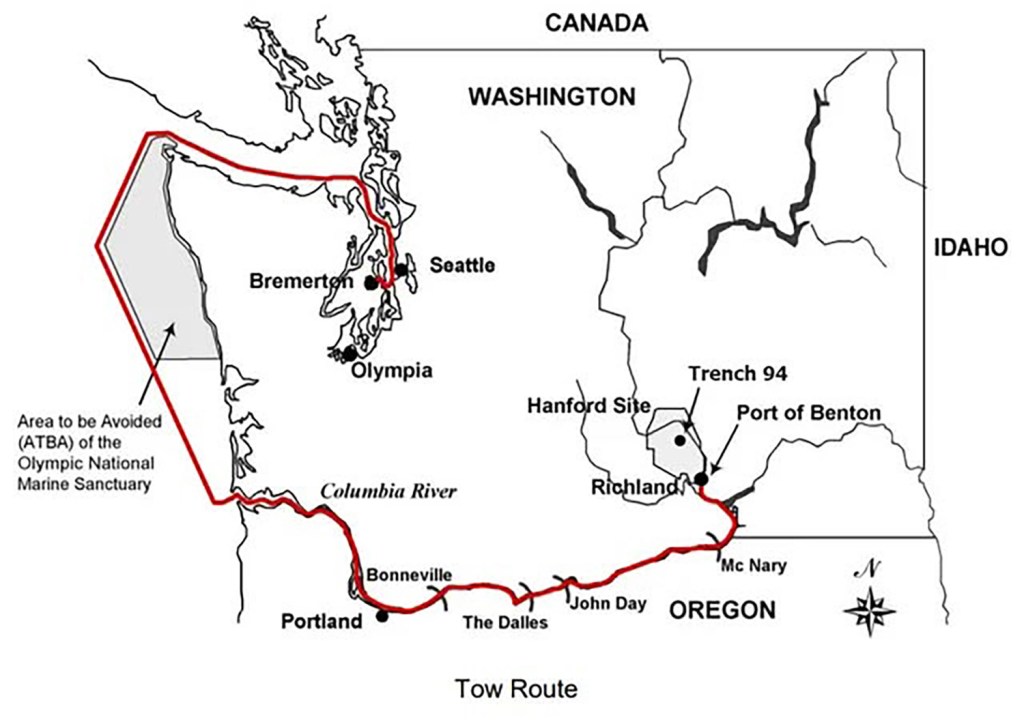
    The sealed “package” is 34′ tall by 45′ long and weighs 1,680 tons. Lead shielding and minor radioactivity from decades of neutron bombardment classify the contents as low-level hazardous waste. Cobalt 60, which has a half-life of 6 years, is the dominant radioactive nuclide.
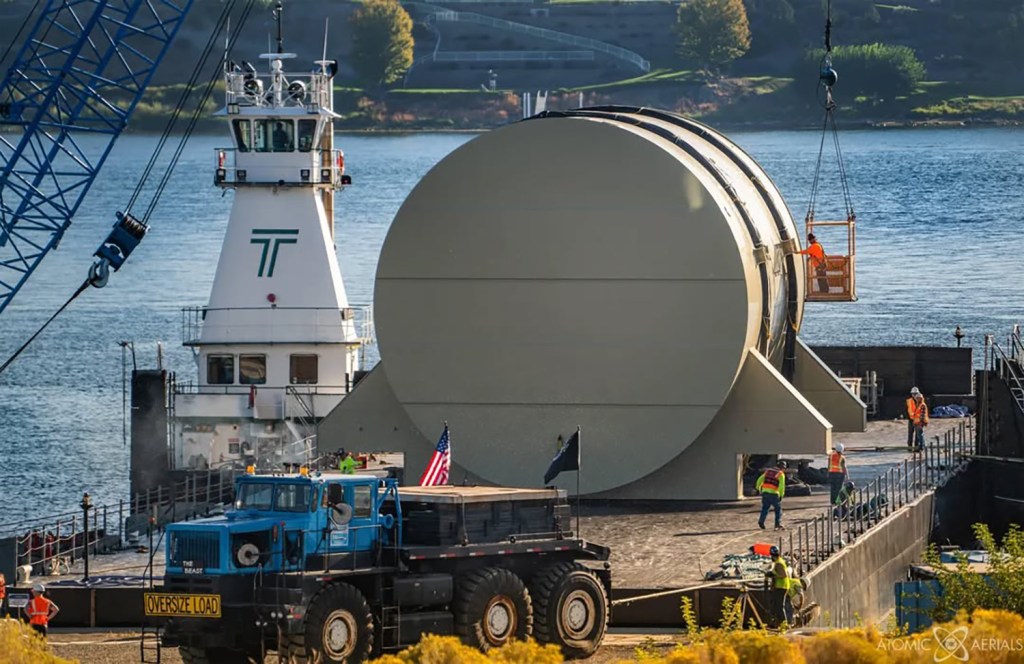
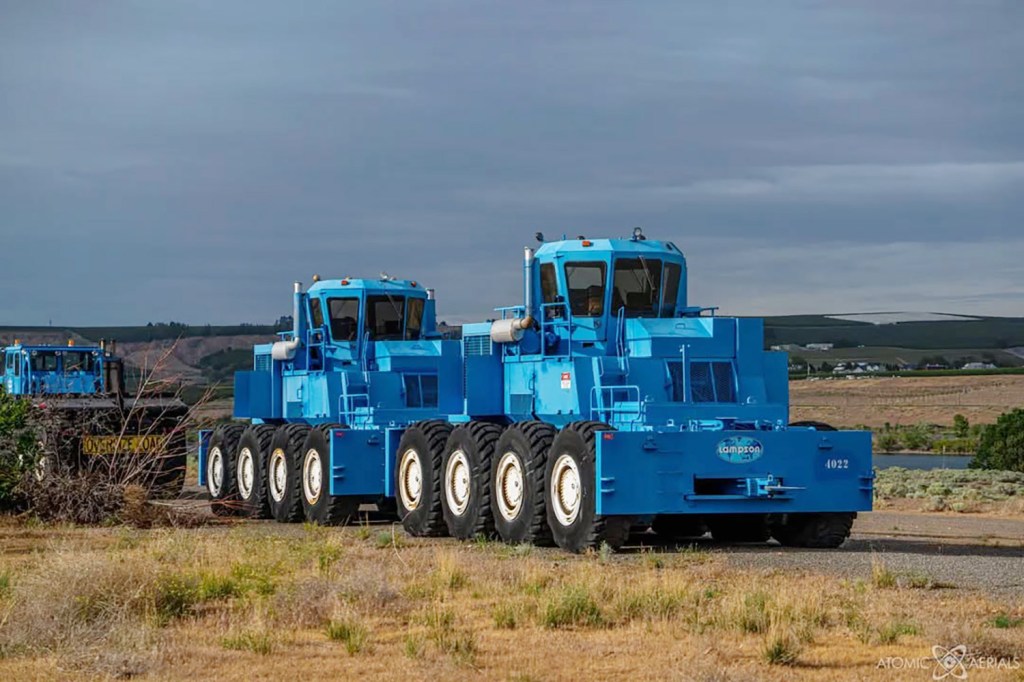
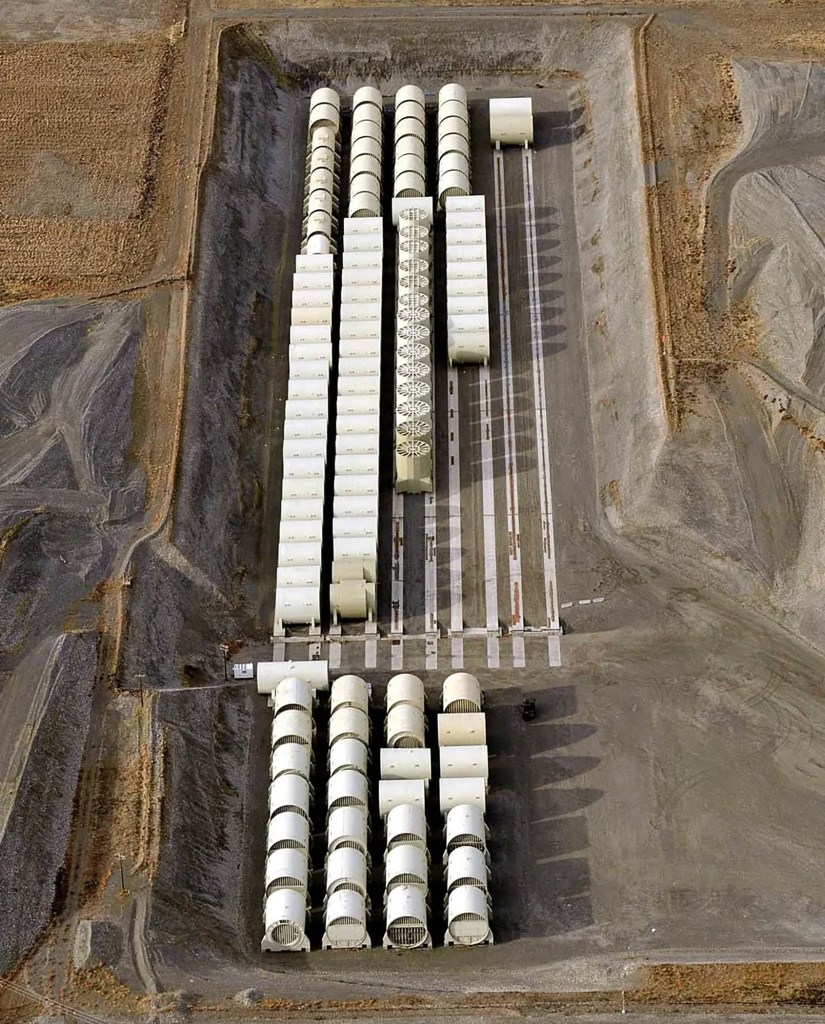
    The package is then loaded onto a self-propelled modular transporter and dragged another 25 miles with giant “land tugs” into the Hanford Site, where it is placed in a huge pit known as Trench 94 with about 130+ other former reactor compartments. The pit is left open so satellites can see into it for treaty purposes, but the pit will eventually be filled with clay and cement.
  • The Submarine Inactivation Process

    The Submarine Inactivation Process

    USS Bremerton/Dry Dock # 1

    The recycling program at Puget Sound Naval Shipyard & Intermediate Maintenance Facility in Bremerton, Washington, is extensive, but the focus is not on plastic bottles, aluminum cans and cardboard boxes. Instead, employees work to dismantle and dispose of decommissioned nuclear vessels. “This is the graveyard, basically, of the nuclear Navy,” said Jack Tappe, the shipyard’s project superintendent and a retired Navy commander who served for 32 years. While the program is essentially a massive demolition project, it directly contributes to the readiness of the force. Putting American tax dollars toward the recycling program ensures the safe and efficient disposal of nuclear vessels when they reach the end of their service life.

    Read the Full Article here:

  • USS Bremerton continues inactivation process

    USS Bremerton continues inactivation process

    Los Angeles-class submarine USS Bremerton (SSN 698) entered Dry Dock 1 at Puget Sound Naval Shipyard & Intermediate Maintenance Facility Oct. 14, 2020, to continue its inactivation process. (PSNS & IMF photo by Wendy Hallmark)

    Los Angeles-class submarine USS Bremerton (SSN 698) entered Dry Dock 1 at Puget Sound Naval Shipyard & Intermediate Maintenance Facility Oct. 14, 2020, to continue its inactivation process.

    According to Gary Van Horn, project superintendent, while the ship is in dry dock, the propulsion plant will be deactivated and defueled; components and parts that might be used by other active Los Angeles-class submarines will be removed and stored; and hull blanks will be installed.

    Van Horn said ship’s force will be working side by side with PSNS & IMF workers to help speed the inactivation process along. Also, the Bremerton Project Team will try to take advantage of lessons learned from other recent inactivations of Los Angeles-class submarines.

    “Lessons learned from the ‘bridge and tower’ system that is being used currently in Dry Dock 5 for defueling operations on USS Olympia (SSN 717) and USS Louisville (SSN 724) will help with Bremerton,” said Van Horn. “We have been monitoring their progress closely and expect to realize time savings based on their lessons learned.”

    The docking portion of the inactivation process is estimated to take about 11 months.

    Bremerton departed Joint Base Pearl Harbor-Hickam, Hawaii, April 20, 2018, on its way to Bremerton, Washington, where it began the inactivation and decommissioning process.

    Bremerton was commissioned on March 28, 1981, and is named after the city of Bremerton, Washington. The tenth ship of the Los Angeles-class nuclear powered attack submarine, much of Bremerton’s activities remain under wraps.

    It’s most high-profile mission was to assist local, state and federal officials with the disposal of the commercial tanker, New Carissa. The vessel had been spilling oil since it was shipwrecked near Coos Bay, Oregon, Feb. 4, 1999, and posed a danger to the environment. Once the unified command completed work in preparation for the ship’s disposal, Bremerton stepped in to fire one MK-48 advanced capability torpedo to sink New Carissa March 11, 1999.

    By Max Maxfield, PSNS & IMF Public Affairs Puget Sound Naval Shipyard & Intermediate Maintenance Facility