Preserving the Legacy of SSN-698 & CA-130
Join us in developing a monument to the submarine, cruiser, their namesake city and the shipyard that cared for them
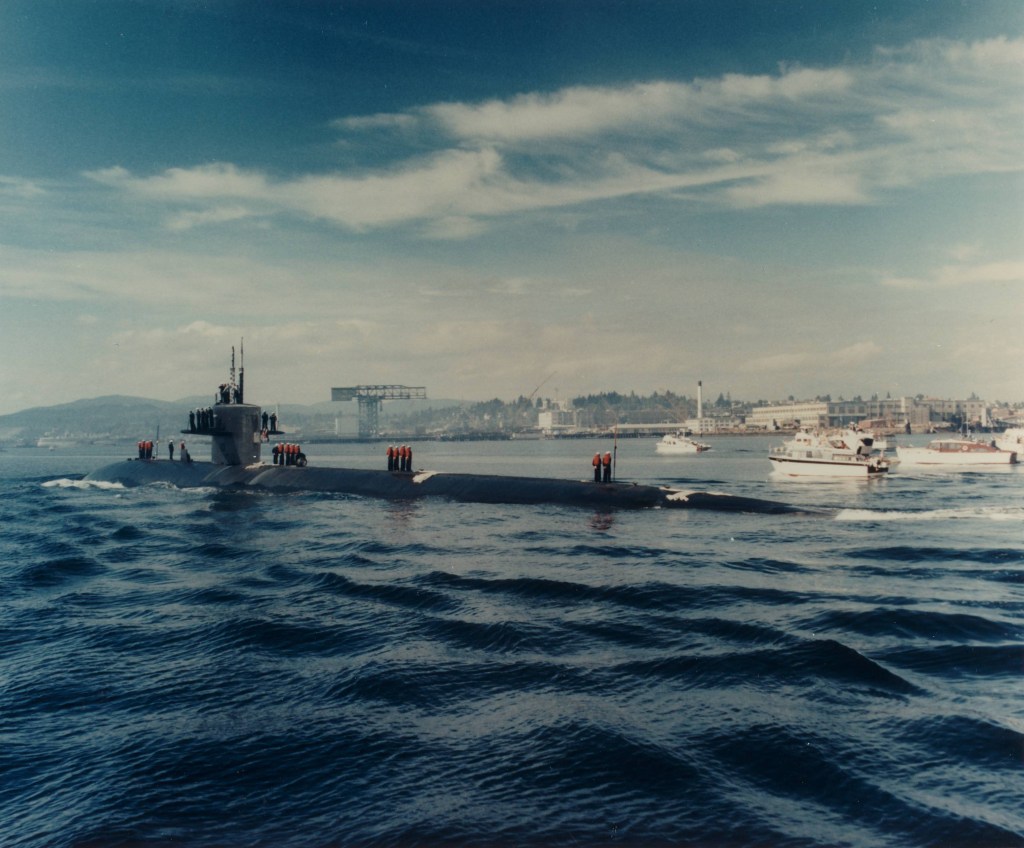
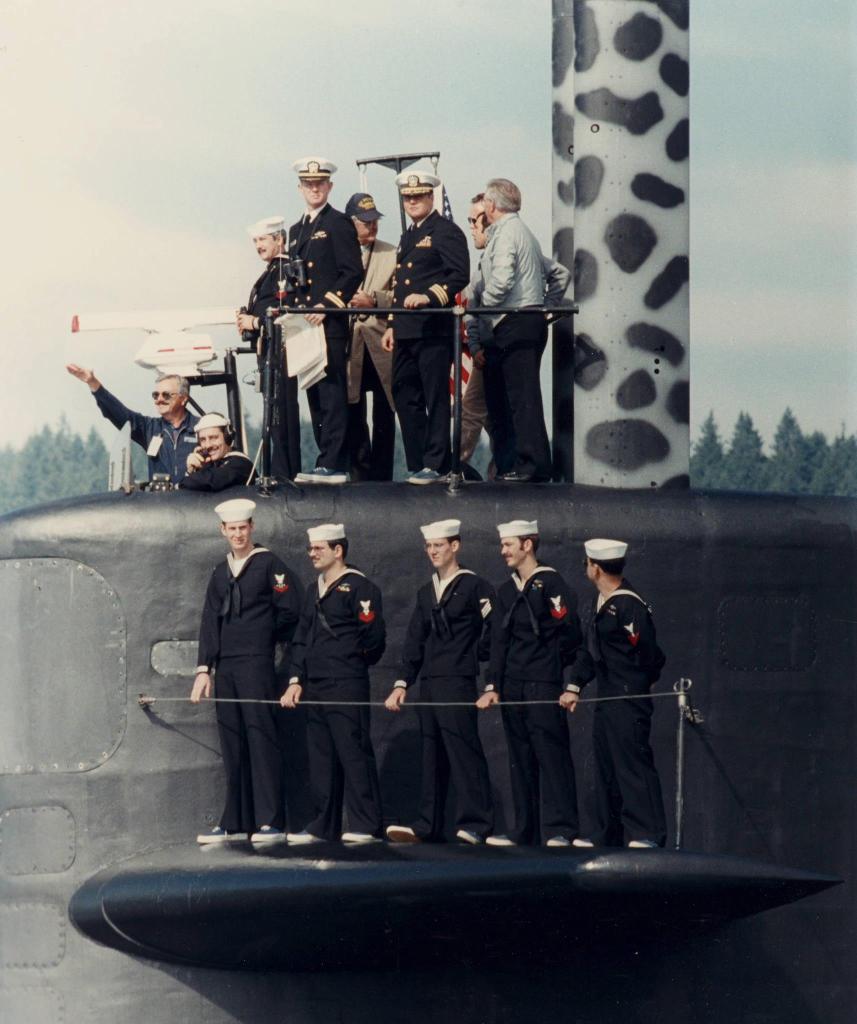
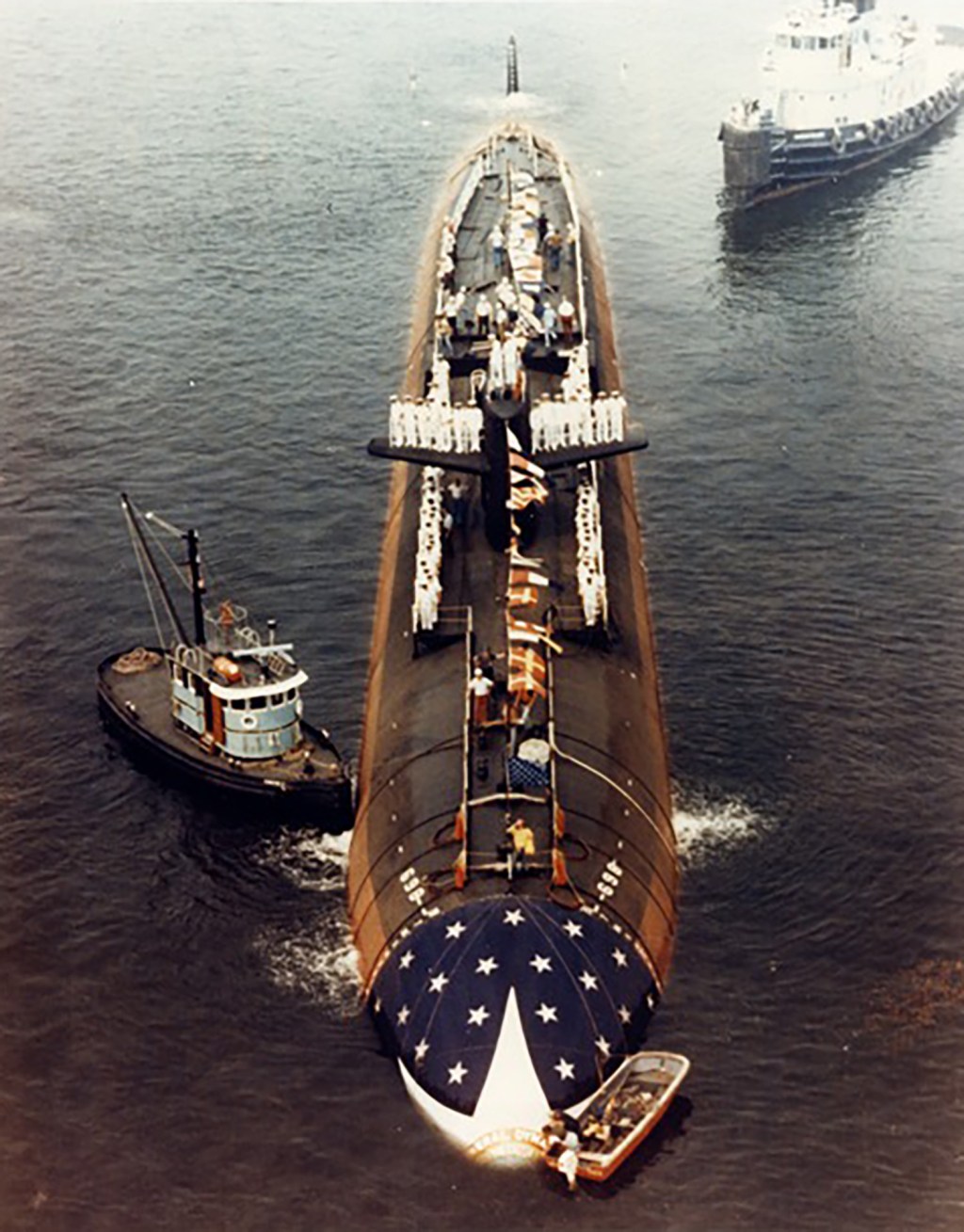
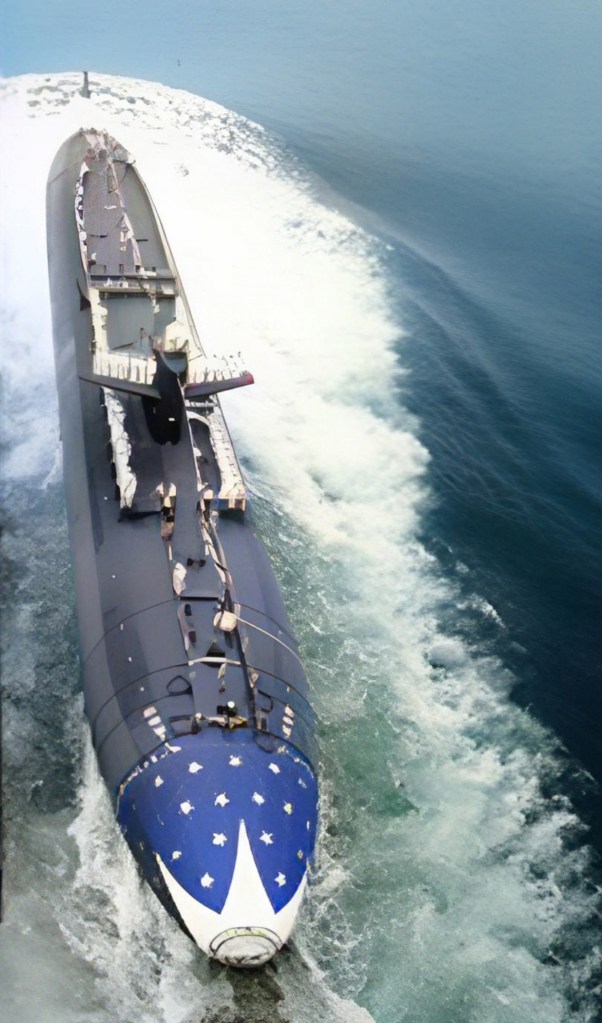
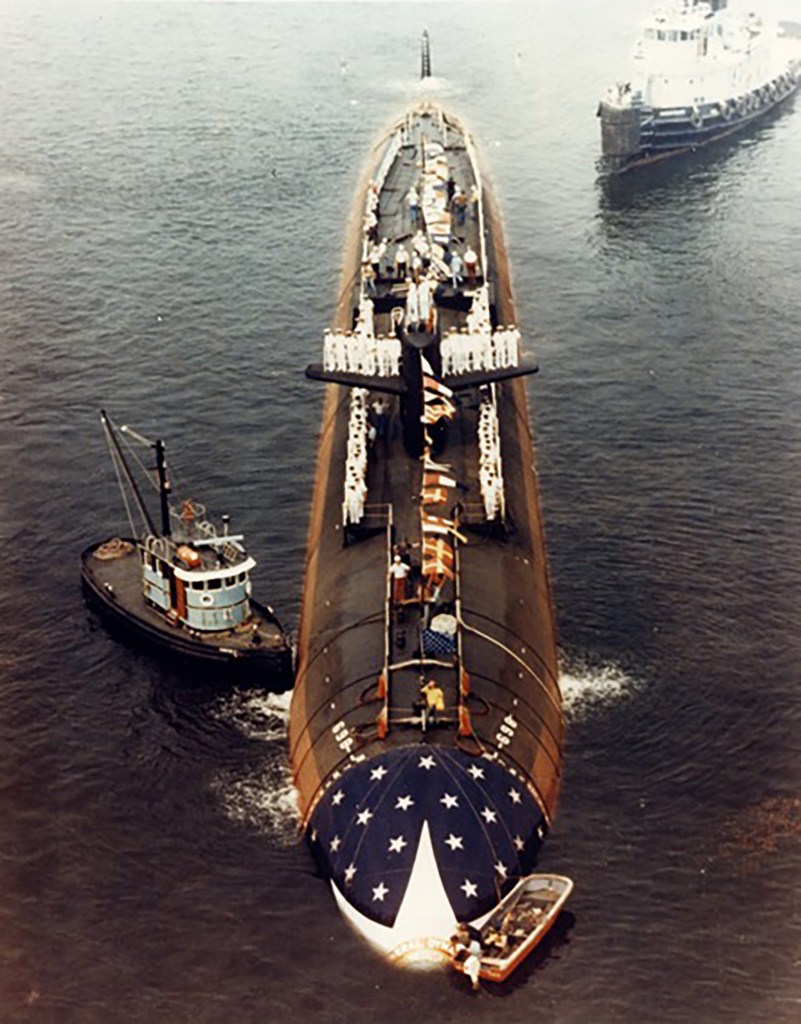
Sea Story – In October 1986 I had the opportunity to bring USS Bremerton to Bremerton. Homeported in Pearl Harbor, I wrote the Bremerton Yacht Club and volunteered to be their Flagship. We rendezvoused with the Navy tug off Point no Point to Load VIPs for the trip into Puget Sound Navy Shipyard (PSNS). It was a typical October Day in Puget Sound, the fog was so thick I couldn’t see my Starboard sailplane. When we rounded Glover Point on entrance into Sinclair Inlet the sky’s opened up and it was a bright, beautiful sunny day. We were met with a flotilla of about 90 Yacht Club boats. It is the only time I’ve seen a Washington State Ferry stop. They came out of the fog behind us and fell into the procession. With 2 tugboats spraying water in front we proceeded into port. The crew was not happy with me, I mandated everyone go on liberty in Service Dress Blues. Their attitude quickly changed when they discovered they couldn’t by a meal or a drink anywhere in the county! It was truly a special time! – Alan Beam CO #3
The person standing behind me in the gray jacket is Mayor Glenn Jarstad. To his right is my brother Glen.
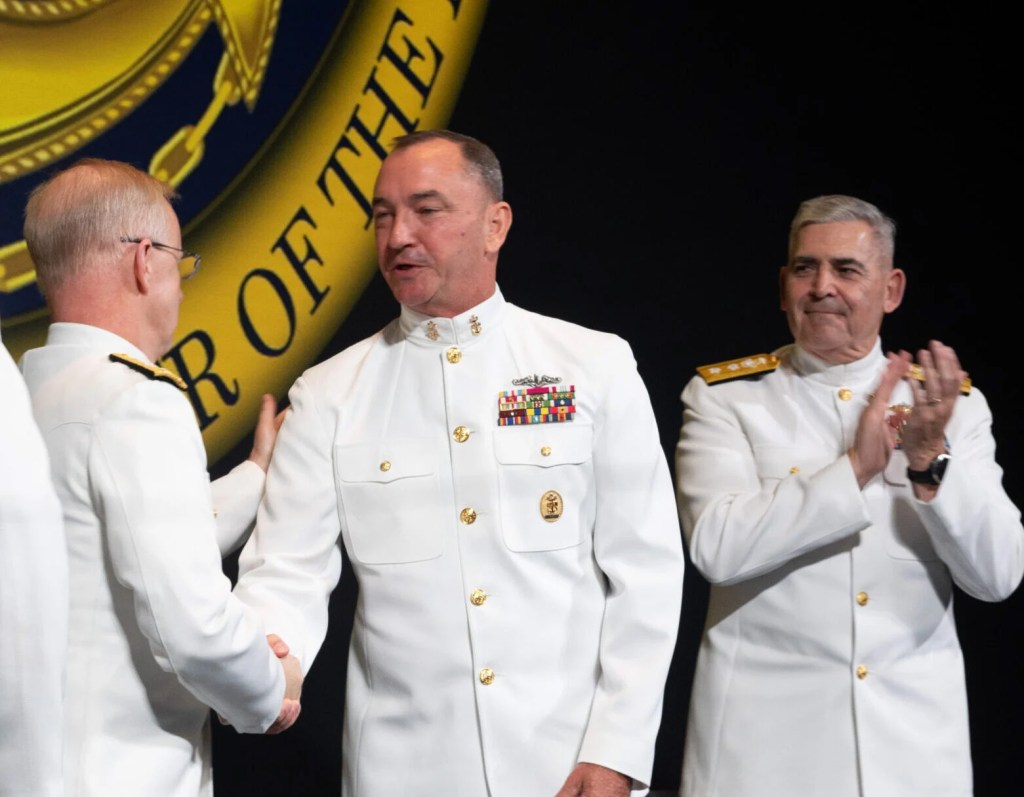
Chief of Naval Operations Admiral Daryl Caudle congratulates the 17th Master Chief Petty Officer of the Navy (MCPON) John Perryman during the MCPON change of office ceremony at the United States Navy Memorial in Washington, D.C., Sept. 8, 2025. US Navy photo
Master Chief Petty Officer of the Navy John Perryman took the helm as the Navy’s top enlisted sailor Monday during a change of command ceremony held in Washington, D.C. Perryman assumed the role less than one month after the Navy announced his selectionto be the 17th master chief petty officer of the Navy. As the top enlisted sailor, Perryman is responsible for advising Chief of Naval Operations Adm. Daryl Caudle and advocating for the needs of the sea service’s enlisted force.
“Our Navy must be manned by world-class sailors led by the best warfighters at every level,” Perryman said. “You have my word — I will always fight for you and for the families who stand beside you.”
Perryman outlined his priorities in a video on Monday following the ceremony, demonstrating he is in lockstep with Caudle.
There is no one better suited to take over the helm as our Navy’s senior enlisted advisor than you,” Caudle said to Perryman during the ceremony. “Your priorities of sailors and families first, technical mastery at every level, and continuous development and talent management and my priorities of Foundry, Fleet, and Fight are mutually reinforcing, collectively exhaustive, and relentlessly enduring.”
Perryman follows MCPON James Honea, who has served in the role since Sept. 8, 2022. Honea will retire Friday after 38 years in the Navy.
Perryman enlisted in the service in 1994 and began his career as an electronics technician submariner with tours on USS Bremerton (SSN-698), USS Dolphin (AGSS-555) and USS Cheyenne(SSN-773). He also served as the command master chief on USS Hawaii (SSN-776), according to the Navy.
He previously served as the senior enlisted sailor of Submarine Force U.S. Pacific Fleet, Submarine Group Seven, in Submarine Force Atlantic and U.S. Strategic Command. Additionally, Perryman served as the senior enlisted advisor to Caudle while the pair led U.S. Fleet Forces Command.
The recycling program at Puget Sound Naval Shipyard & Intermediate Maintenance Facility in Bremerton, Washington, is extensive, but the focus is not on plastic bottles, aluminum cans and cardboard boxes. Instead, employees work to dismantle and dispose of decommissioned nuclear vessels. “This is the graveyard, basically, of the nuclear Navy,” said Jack Tappe, the shipyard’s project superintendent and a retired Navy commander who served for 32 years. While the program is essentially a massive demolition project, it directly contributes to the readiness of the force. Putting American tax dollars toward the recycling program ensures the safe and efficient disposal of nuclear vessels when they reach the end of their service life.
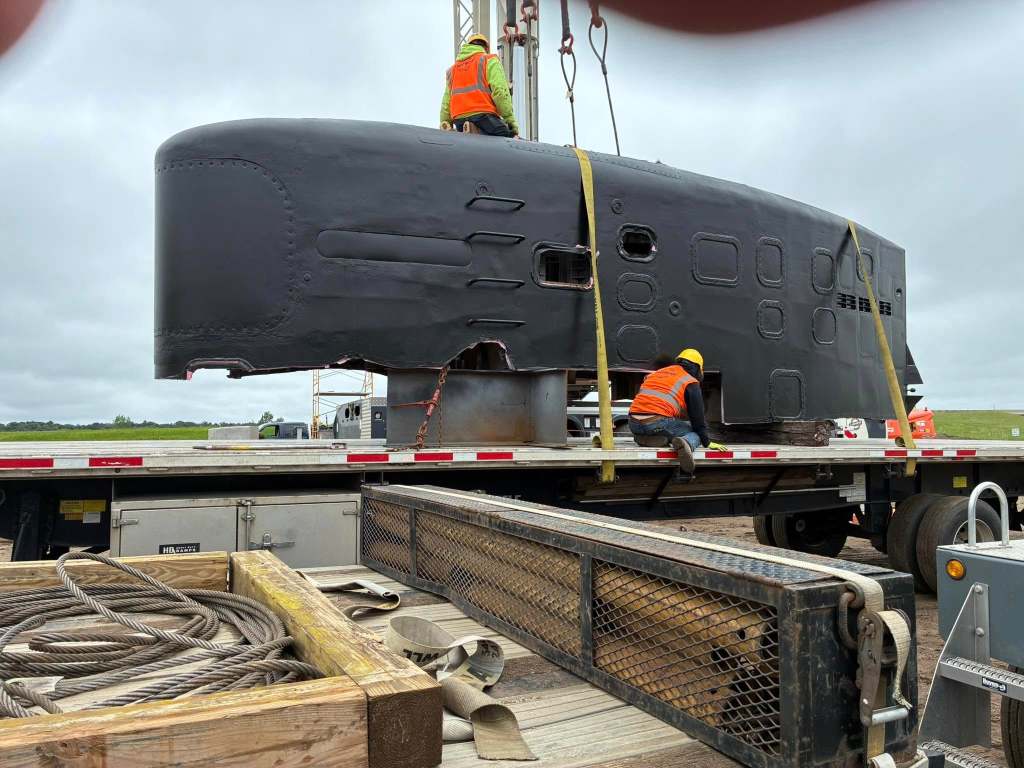
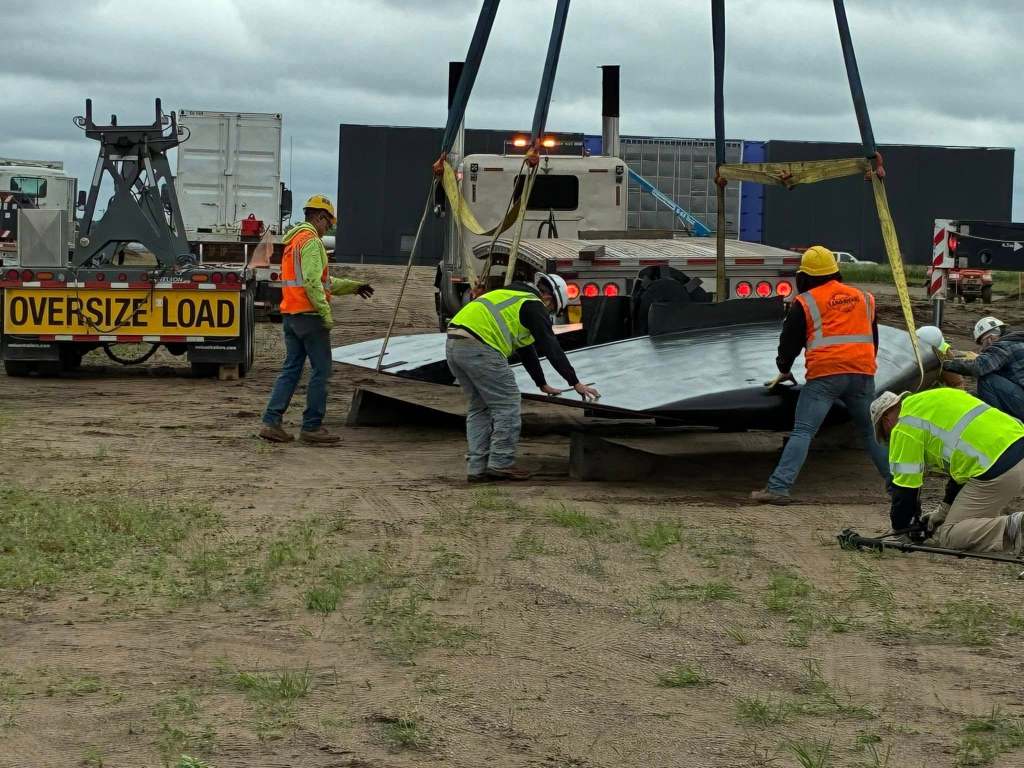
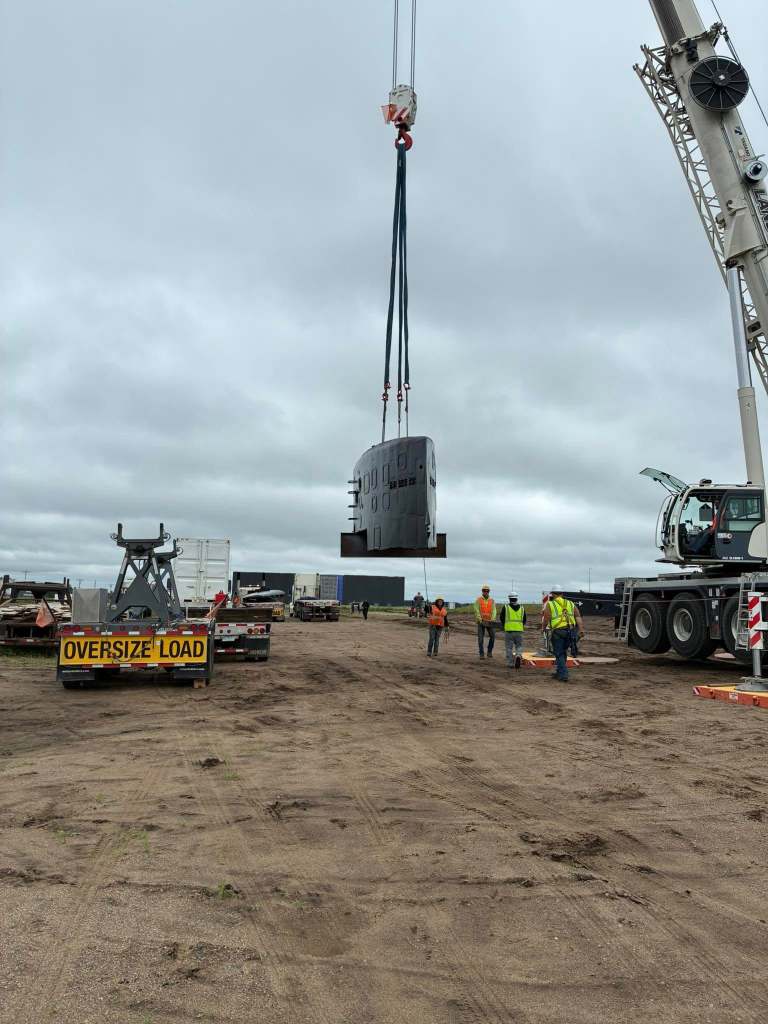
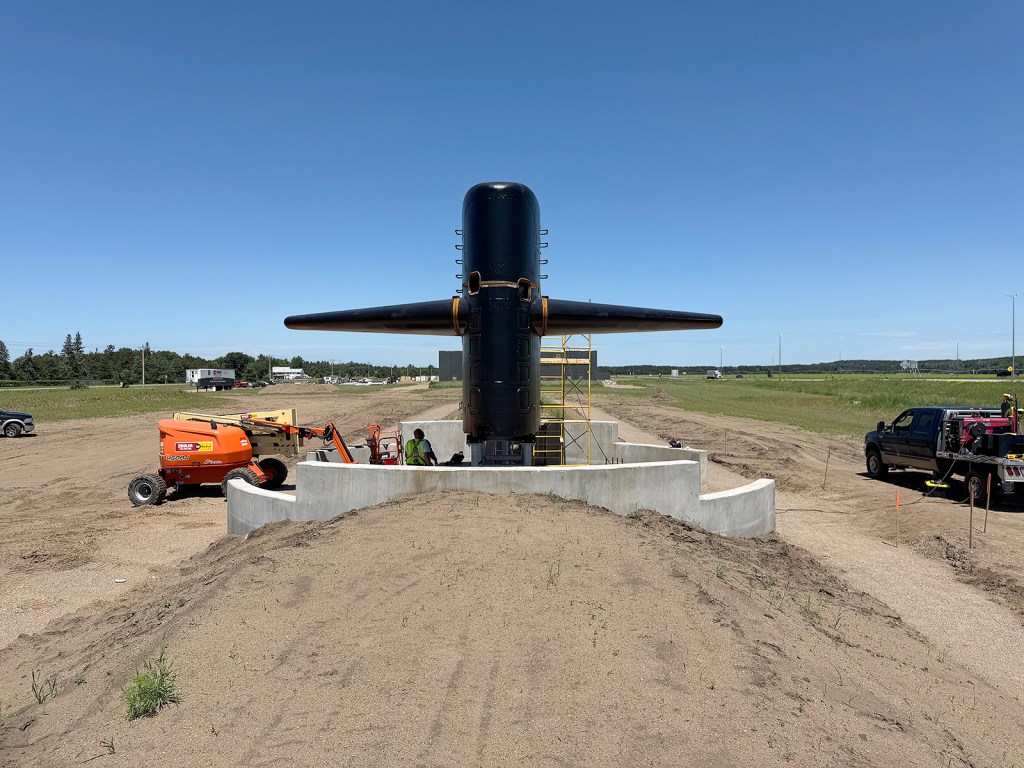
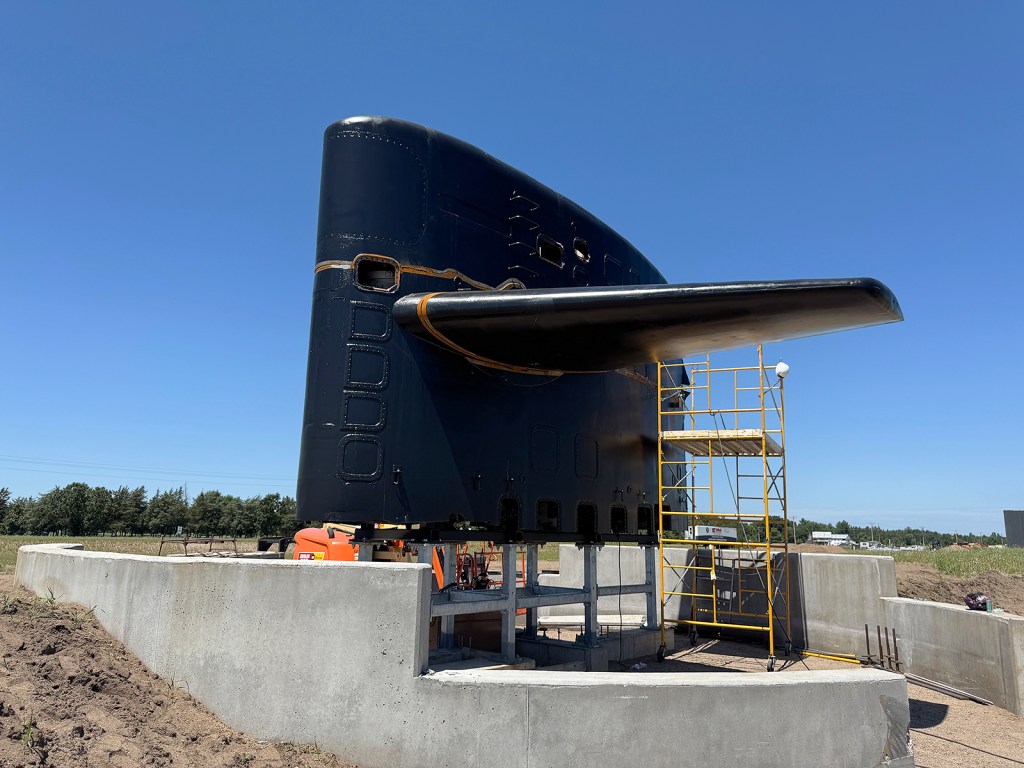
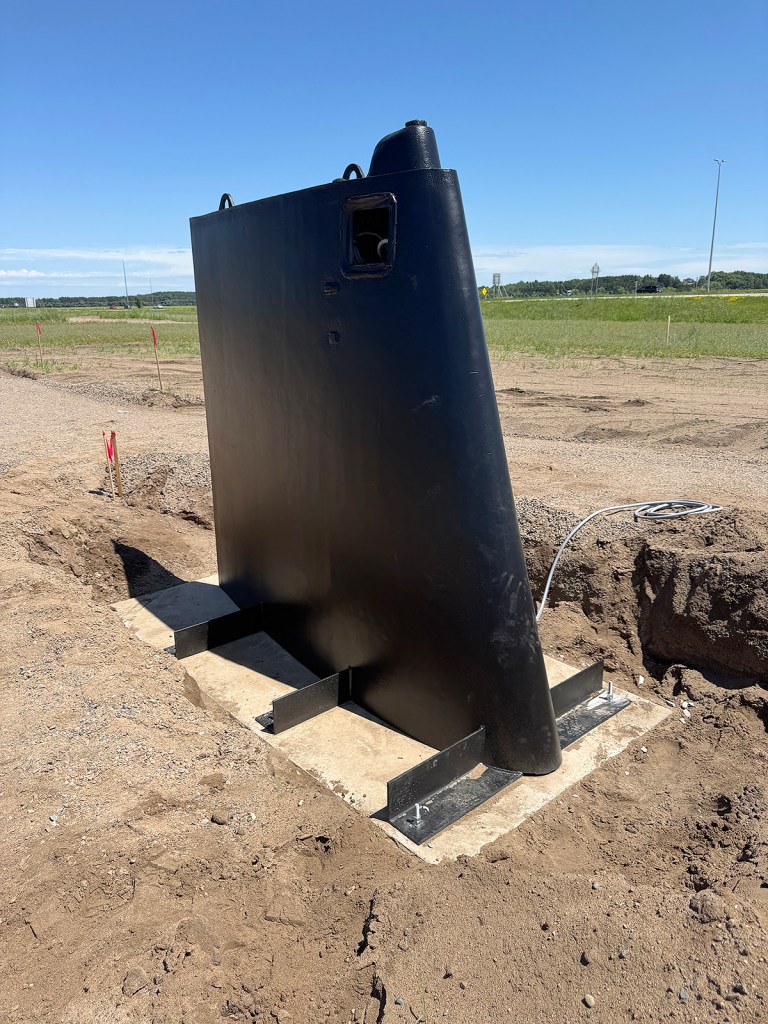
SSN-708’s sail and rudder have been installed at the Minnesota Military Museum’s new site. The sail is in place and welders are attaching the top half to the bottom. The earthen berm will serve as a representation of the hull.
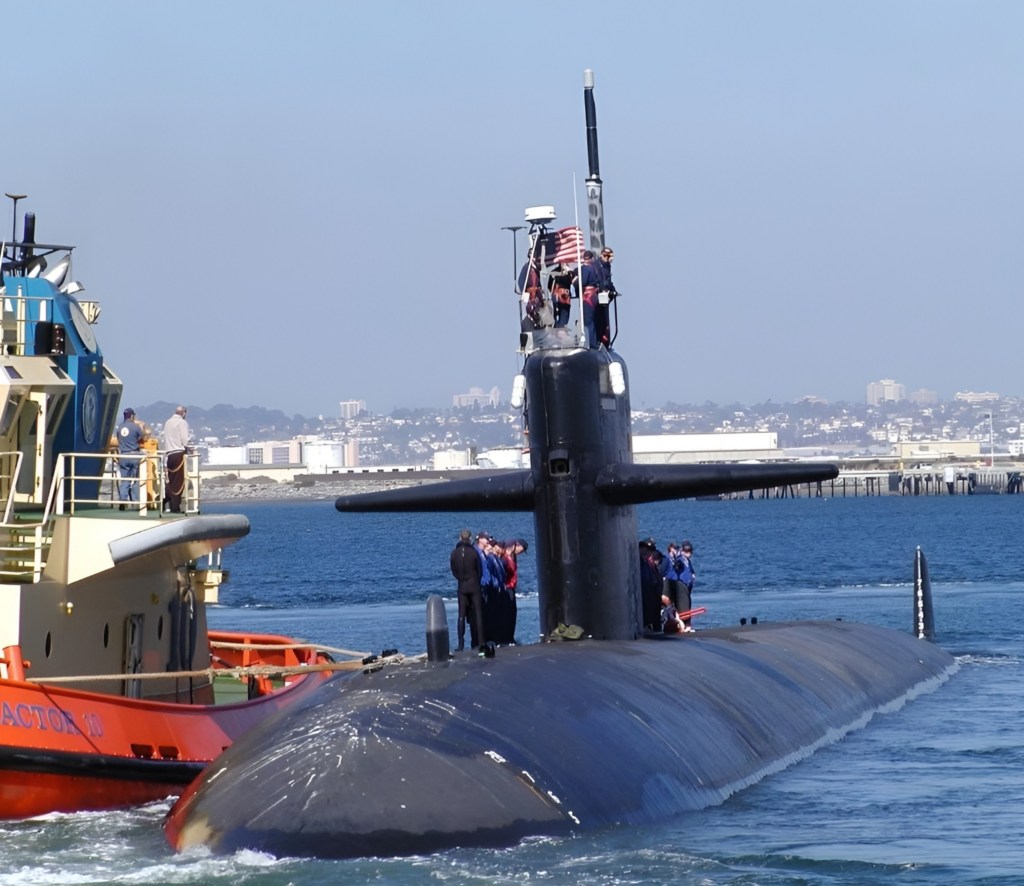
Bremerton (SSN-698) departs its homeport of San Diego on 14 March 2003 for a Western Pacific Deployment. Commanded by Cmdr. Jerry Logan, the Los Angeles class attack submarine has a crew of more than 130 men and will be conducting operations throughout the Western Pacific.
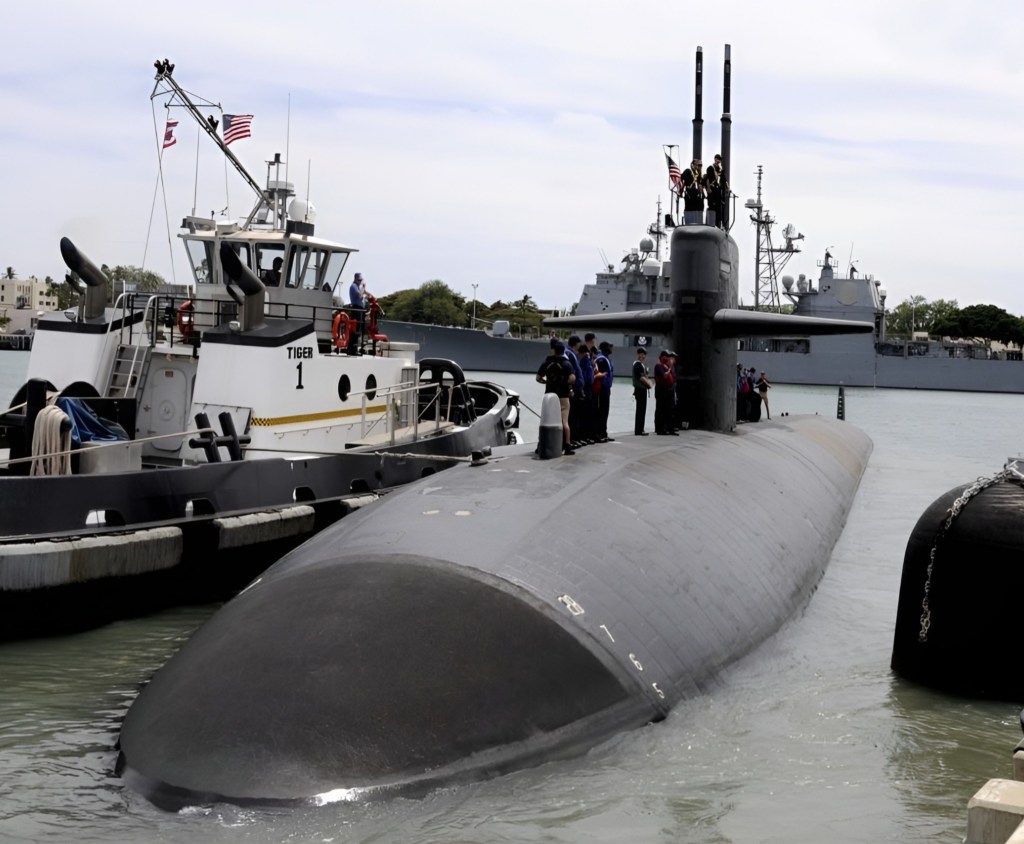
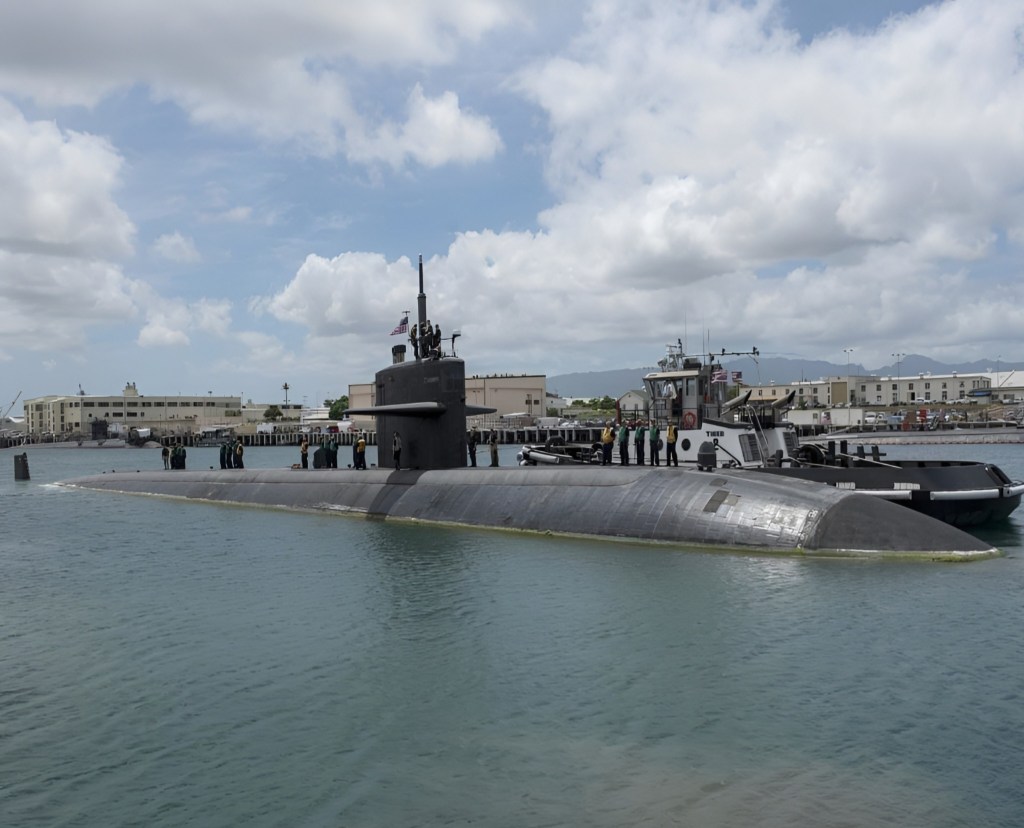
The fast-attack submarine Bremerton (SSN-698) departs Joint Base Pearl Harbor-Hickam for the final time, 20 April 2018. Bremerton is en route to Puget Sound Naval Shipyard in Bremerton, Wash., to commence its inactivation process and decommissioning after 37 years of service.
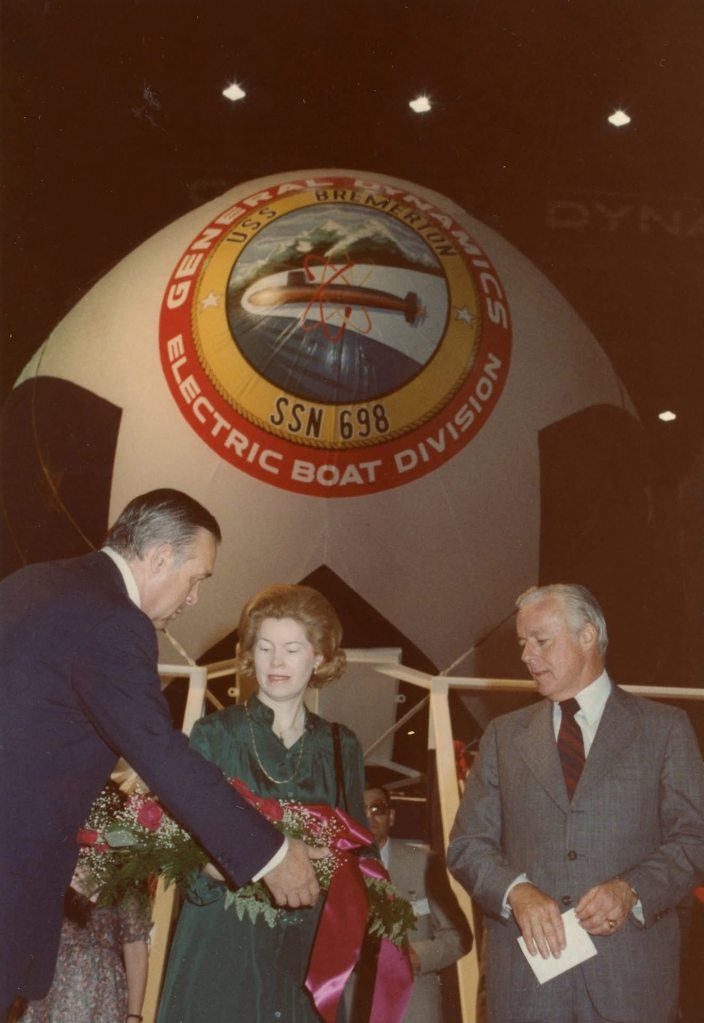
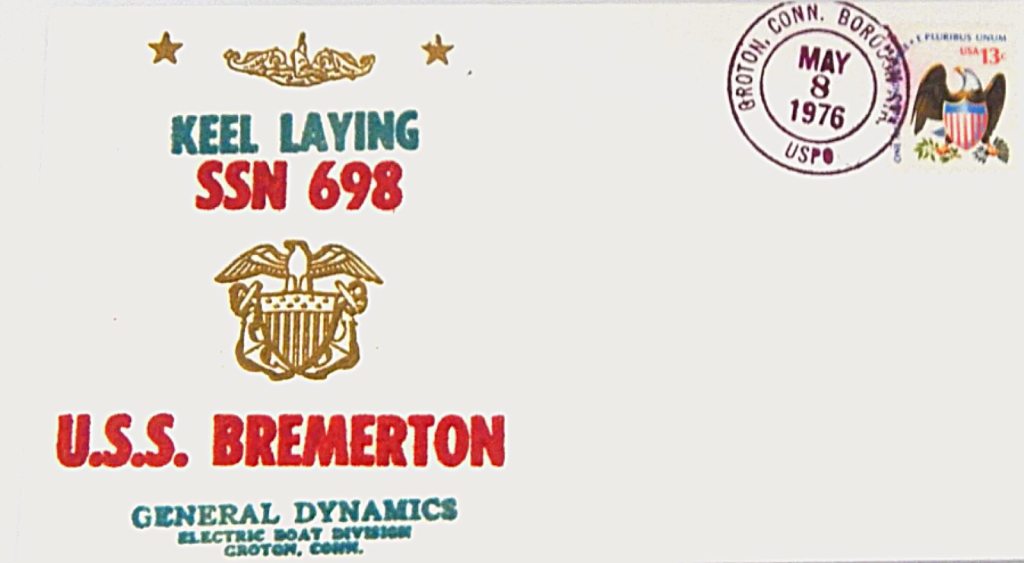
The keel-laying ceremony for submarines is symbolic and includes welding the initials of the ship’s sponsor onto a steel plate. This plate is then mounted in a place of honor on the submarine once it’s completed, serving as a reminder of the ship’s official beginning.
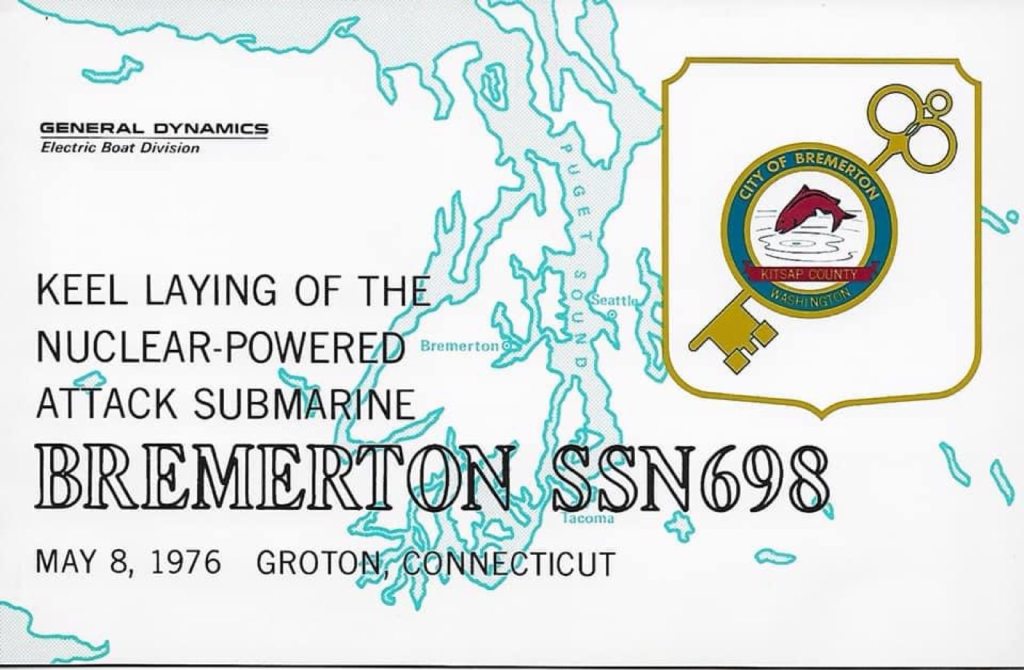
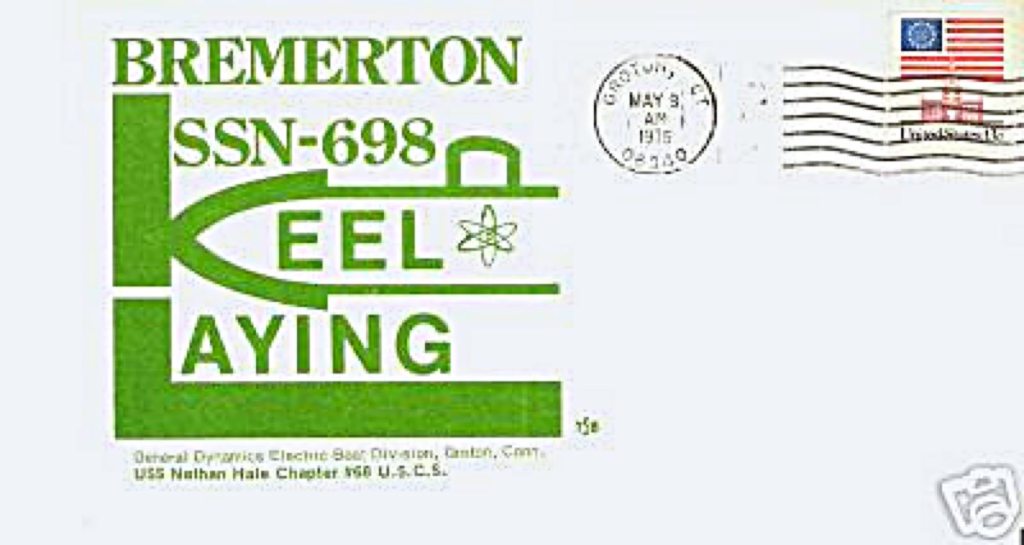
USS Bremerton, SSN-698 keel laying took place on May 8, 1976 at the Electric Boat Division of General Dynamics Corporation Groton, Connecticut.
The Ship’s sponsor, was Mrs. Helen Jackson, wife of Henry M. Jackson, US Senator from the State of Washington.
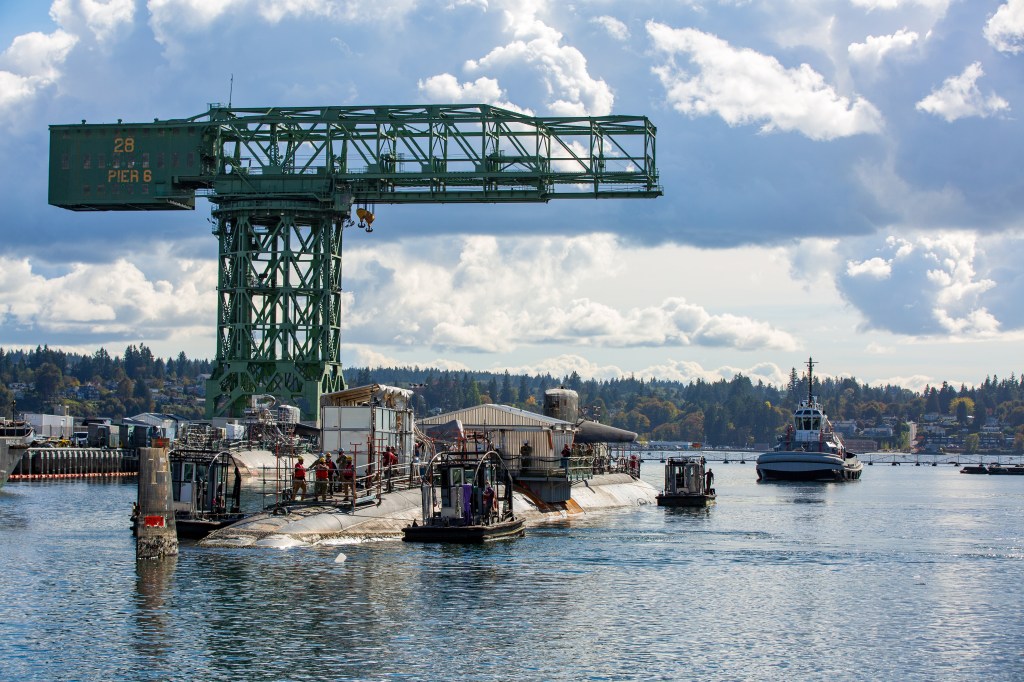
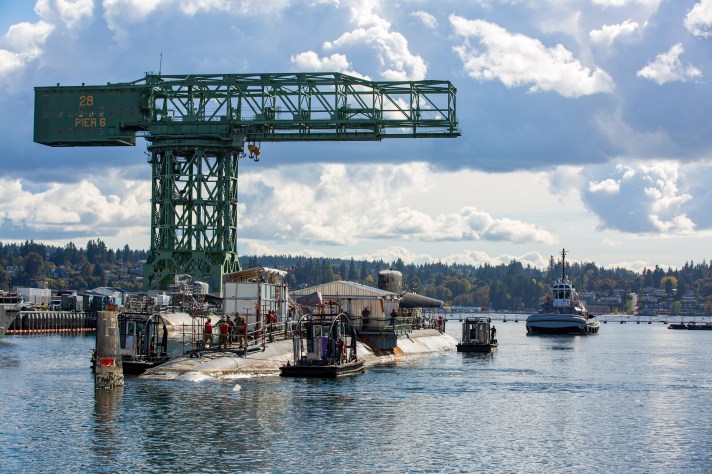
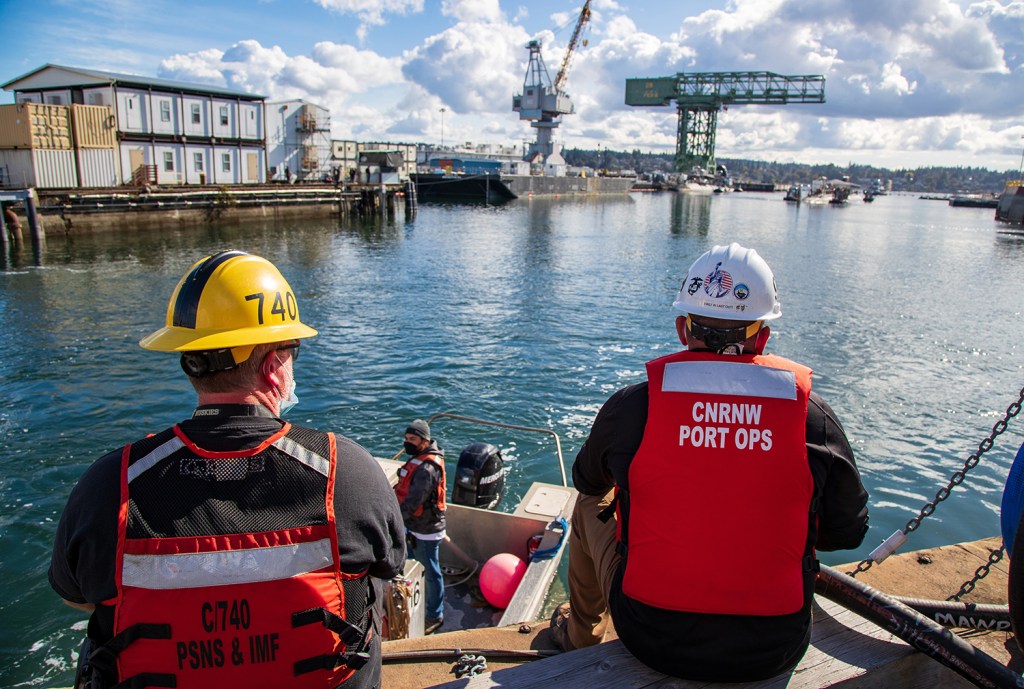
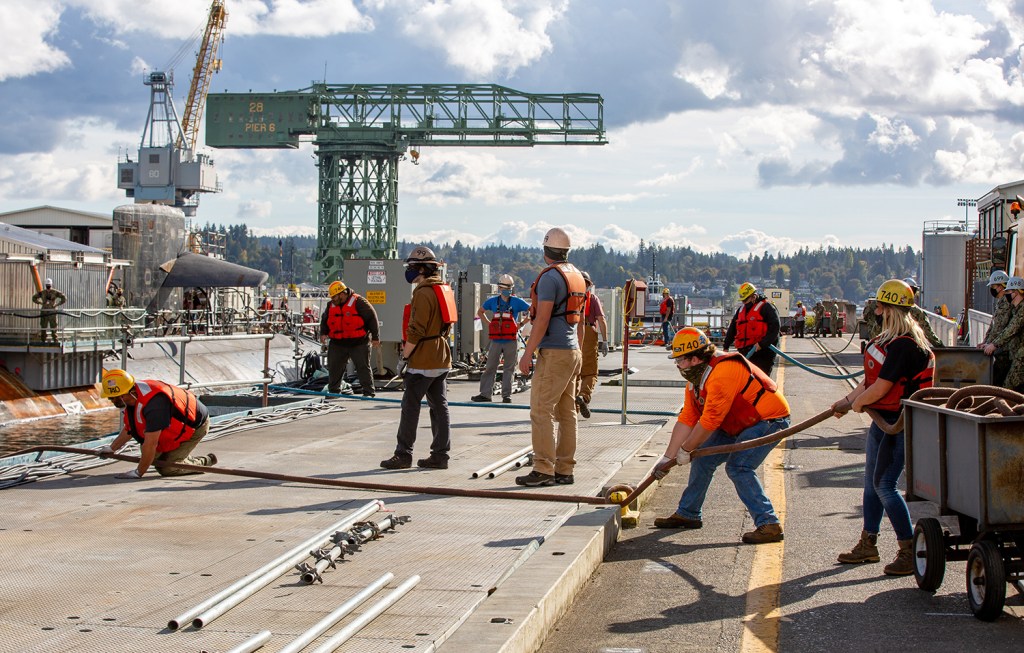
Los Angeles-class submarine USS Bremerton (SSN 698) entered Dry Dock 1 at Puget Sound Naval Shipyard & Intermediate Maintenance Facility Oct. 14, 2020, to continue its inactivation process. (PSNS & IMF photo by Wendy Hallmark)
Los Angeles-class submarine USS Bremerton (SSN 698) entered Dry Dock 1 at Puget Sound Naval Shipyard & Intermediate Maintenance Facility Oct. 14, 2020, to continue its inactivation process.
According to Gary Van Horn, project superintendent, while the ship is in dry dock, the propulsion plant will be deactivated and defueled; components and parts that might be used by other active Los Angeles-class submarines will be removed and stored; and hull blanks will be installed.
Van Horn said ship’s force will be working side by side with PSNS & IMF workers to help speed the inactivation process along. Also, the Bremerton Project Team will try to take advantage of lessons learned from other recent inactivations of Los Angeles-class submarines.
“Lessons learned from the ‘bridge and tower’ system that is being used currently in Dry Dock 5 for defueling operations on USS Olympia (SSN 717) and USS Louisville (SSN 724) will help with Bremerton,” said Van Horn. “We have been monitoring their progress closely and expect to realize time savings based on their lessons learned.”
The docking portion of the inactivation process is estimated to take about 11 months.
Bremerton departed Joint Base Pearl Harbor-Hickam, Hawaii, April 20, 2018, on its way to Bremerton, Washington, where it began the inactivation and decommissioning process.
Bremerton was commissioned on March 28, 1981, and is named after the city of Bremerton, Washington. The tenth ship of the Los Angeles-class nuclear powered attack submarine, much of Bremerton’s activities remain under wraps.
It’s most high-profile mission was to assist local, state and federal officials with the disposal of the commercial tanker, New Carissa. The vessel had been spilling oil since it was shipwrecked near Coos Bay, Oregon, Feb. 4, 1999, and posed a danger to the environment. Once the unified command completed work in preparation for the ship’s disposal, Bremerton stepped in to fire one MK-48 advanced capability torpedo to sink New Carissa March 11, 1999.
USS Bremerton/Dry Dock # 1USS Bremerton/Dry Dock # 1
By Max Maxfield, PSNS & IMF Public Affairs Puget Sound Naval Shipyard & Intermediate Maintenance Facility